by
Hannah Farber
| Nov 23, 2026
Scott Kinsel was driving out
to the property he'd just bought in New Ulm, Texas when he saw the
cattle. Longhorns, maybe thirty or forty of them, filling a pasture
along the road. He didn't know a thing about the breed yet, he just
knew that was what he needed to do.
He
found out who owned them. It was Jeremy James of 3J Longhorns, his
next door neighbor, as it turned out. That conversation started what
Scott now calls an addiction.
Twenty years before he ever thought about Texas Longhorns, Scott Kinsel bought his first business from Red McCombs, a man whose Longhorn program had shaped the breed for decades. When Scott found himself at the Glendenning Fiesta Sale buying his first cattle, he felt the thread connect. The only problem was that he didn’t have any fences yet.
The Fifth Generation Who Went His Own Direction
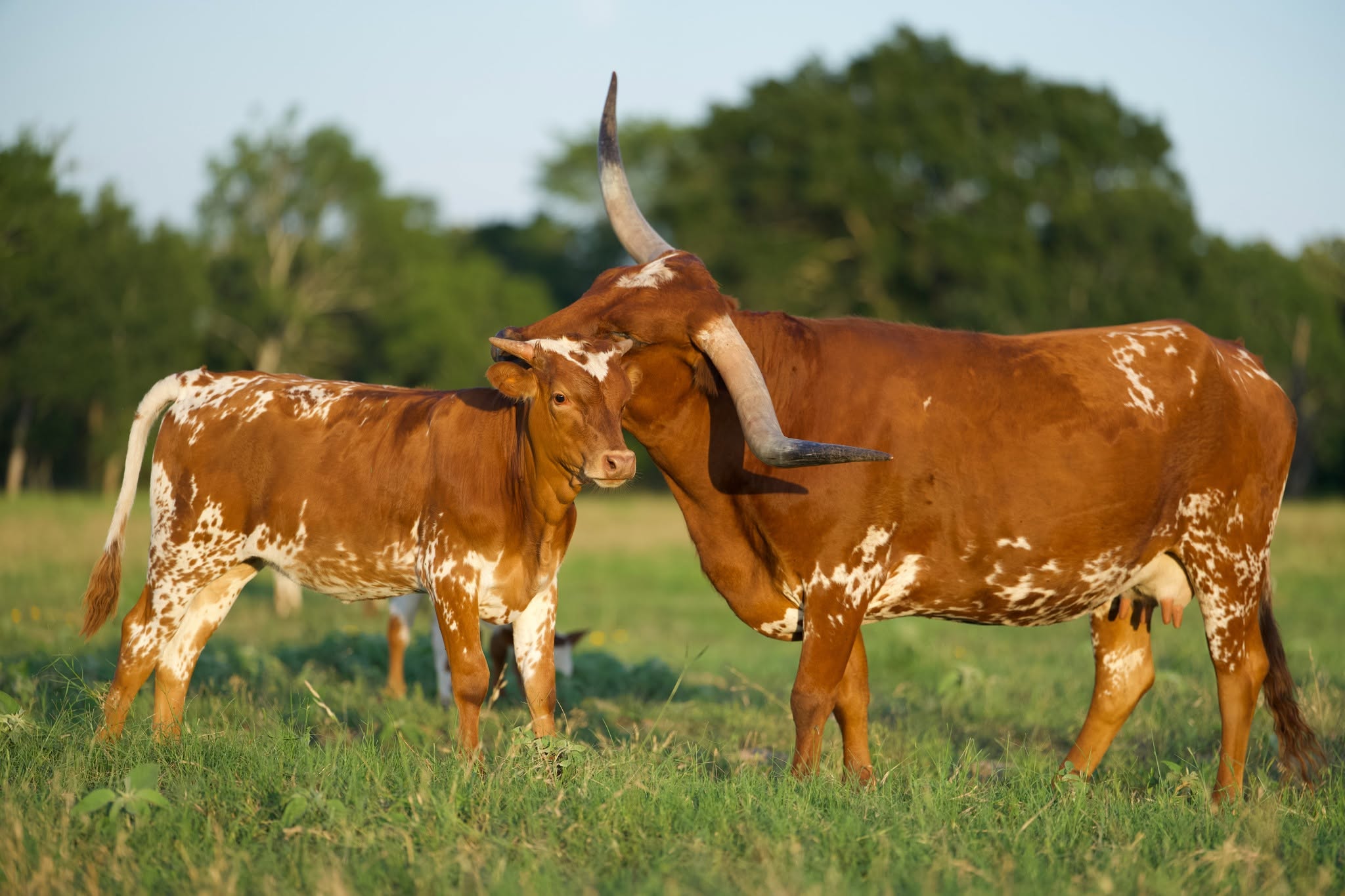
The Kinsel family has been in
commercial cattle for a long time in South Texas. His dad raised show
steers outside Beaumont. His brothers, his parents, his stepmother,
everybody went to the University of Texas. When Scott bought the New
Ulm property almost two years ago, he wasn't sure what direction
he'd go with it. Longhorns were not the family tradition, they just
showed up in the right pasture at the right moment.
'It's
in our blood,' he says of the UT connection. And then, pragmatically:
'And when I got this piece of property, I wasn't really sure which
direction I was gonna go.'
He
went to the Glendenning Fiesta Sale with a laptop and a mix of AI
searches and historical sales data. He had his eye on a
heifer from Webb Family Farm and a Fifty-Fifty BCB daughter from Nathan Jones of Wild Serenade Ranch named Jest a Jungle Cat. He
bought both. Jungle Cat, in particular, he felt good about. She
came right after a six-figure animal, which created a natural lull.
Multiple people have tried to buy her since, but she is, as Scott puts
it, 'never going anywhere.'
The
fencing came later. Until it was ready, Jeremy James kept the new cattle at
3J. That was the beginning of a mentorship that has shaped how Blue
Duck Farm runs to this day.
The Name on the Napkin
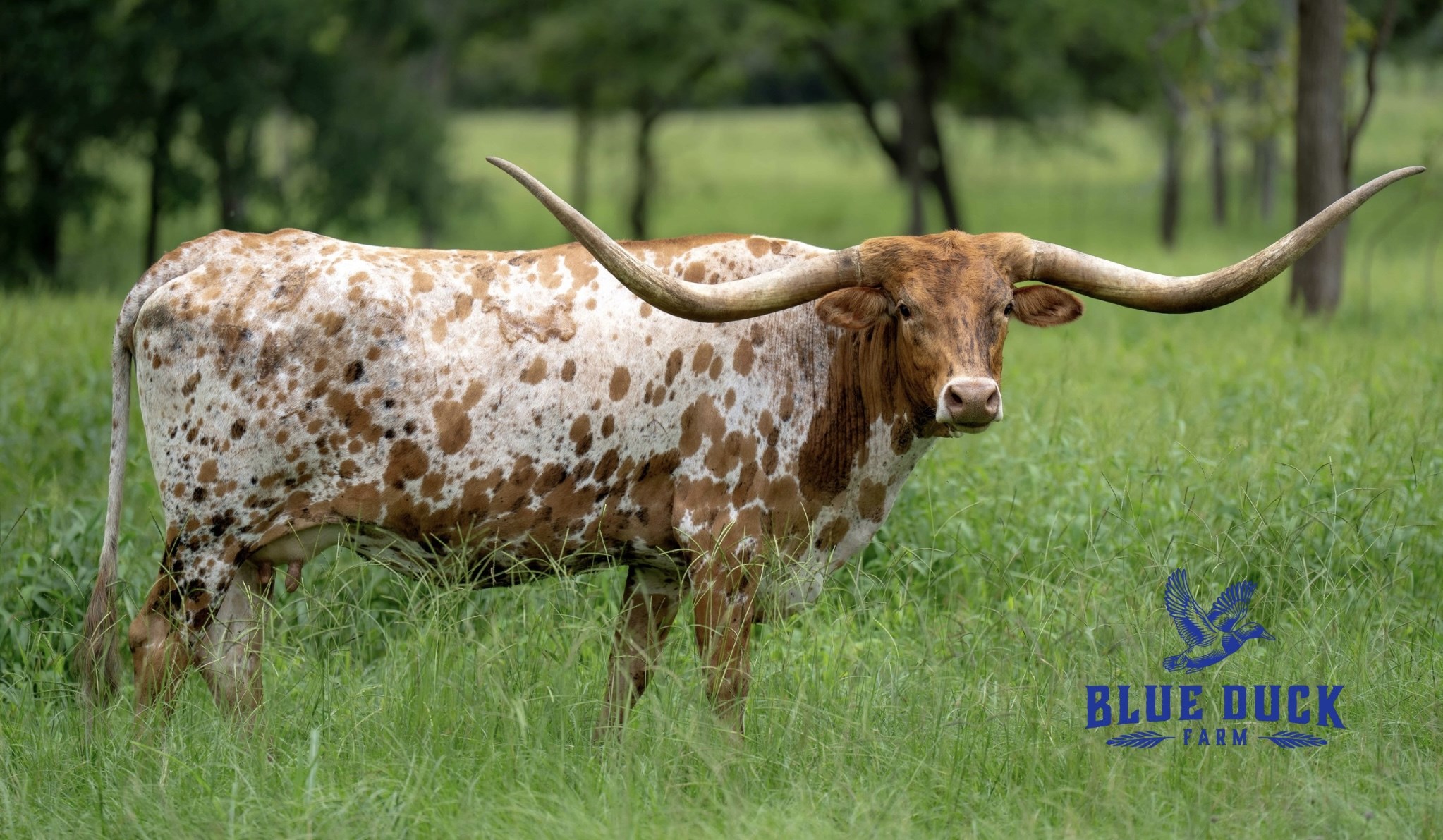
Blue Duck Farm did not come from a marketing consultation, it came from Larry McMurtry.
Scott grew up reading Lonesome Dove, the way kids these days are carrying Harry Potter books around. Blue Duck is a character in McMurtry's series. When he drove out to the New Ulm property for the first time and saw blue-winged teal on the pond, the name clicked.
'From a marketing standpoint, it's pretty good,' he says. 'It's easy to remember.'
The logo came from a night on the back porch with a cold beverage. He's a creative person, he spent years doing adventure travel photography, shooting big cats and polar bears and great white sharks off Guadalupe Island. He drew what he wanted on a napkin, zero AI involved.
He's also not afraid to use emojis on the site. The blue circle and duck have become unofficial shorthand for Blue Duck Farm across his social media. He uses them selectively, mostly next to cows with names that lend themselves to it, like Rose or Jaguar or Whiskey.
What Twist Does
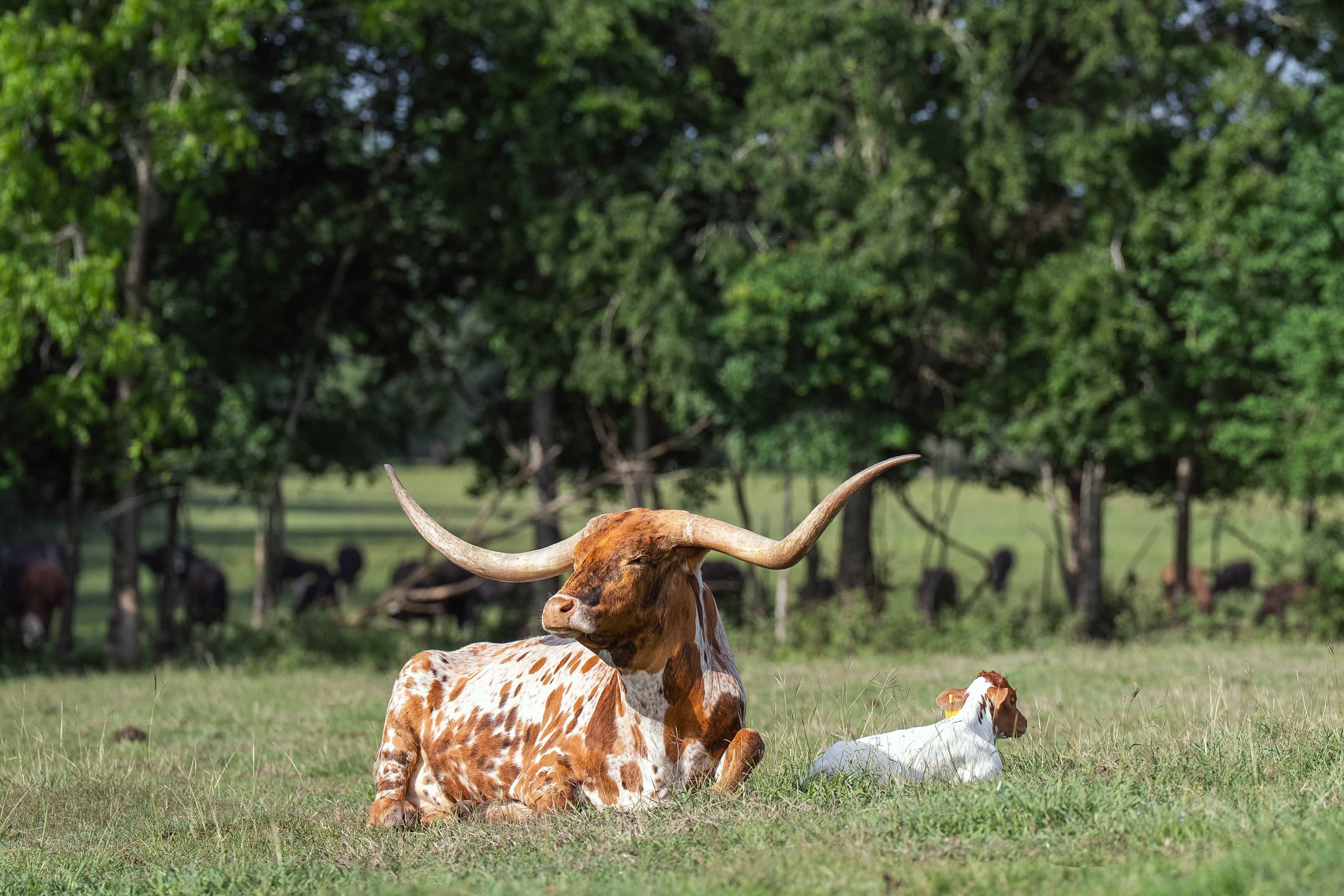
Ask Scott to describe his
breeding philosophy and he'll give you a quick hierarchy: temperament
and conformation are the floor, he culls aggressively on anything
that misses there. After that, it's color, and then twist.
'As
soon as I see twist, I stop and I stare,' he says. At sales, online, and in the pasture, that pause is the signal. He calls it the algorithm
test: scrolling through progeny photos, he watches for the animal
that makes him hesitate. Twist does that to him.
He
tried AI first, the way a lot of new breeders do. He admits it was a
strategy based on hope; access to a proven sire from afar, you better cross
your fingers. He had no luck, zero out of seventeen. He eventually bought a bull from
Randy Murry of New Age Cattle Company and had the immediate realization he should have done
that first. 'As soon as he got here, I was like, that's what I like.
I need bulls on my property.'
He
has three herd sires now: Jammin Rex, NACC Bam Bam (a Formal Attire son),
and a junior sire named Blue Duck's Sicario, out of Cool Hand Luke Chex. Jammin Rex has progeny on
the ground outside Blue Duck Farm, and Scott has bought some back.
The first four calves he dropped on the property were bulls, which is
an occupational hazard. The last two were heifers, which he describes them
as 'big, colored up.' He's encouraged.
His
favorite female is a Rockin' H Longhorns-bred cow named DH Whiskey Girl. He bought her
from Randy Murry and, as he puts it, he still can't quite believe
Randy sold her. She's listed on his website at five million dollars,
which is the internationally recognized way of saying she is not for
sale.
'She's
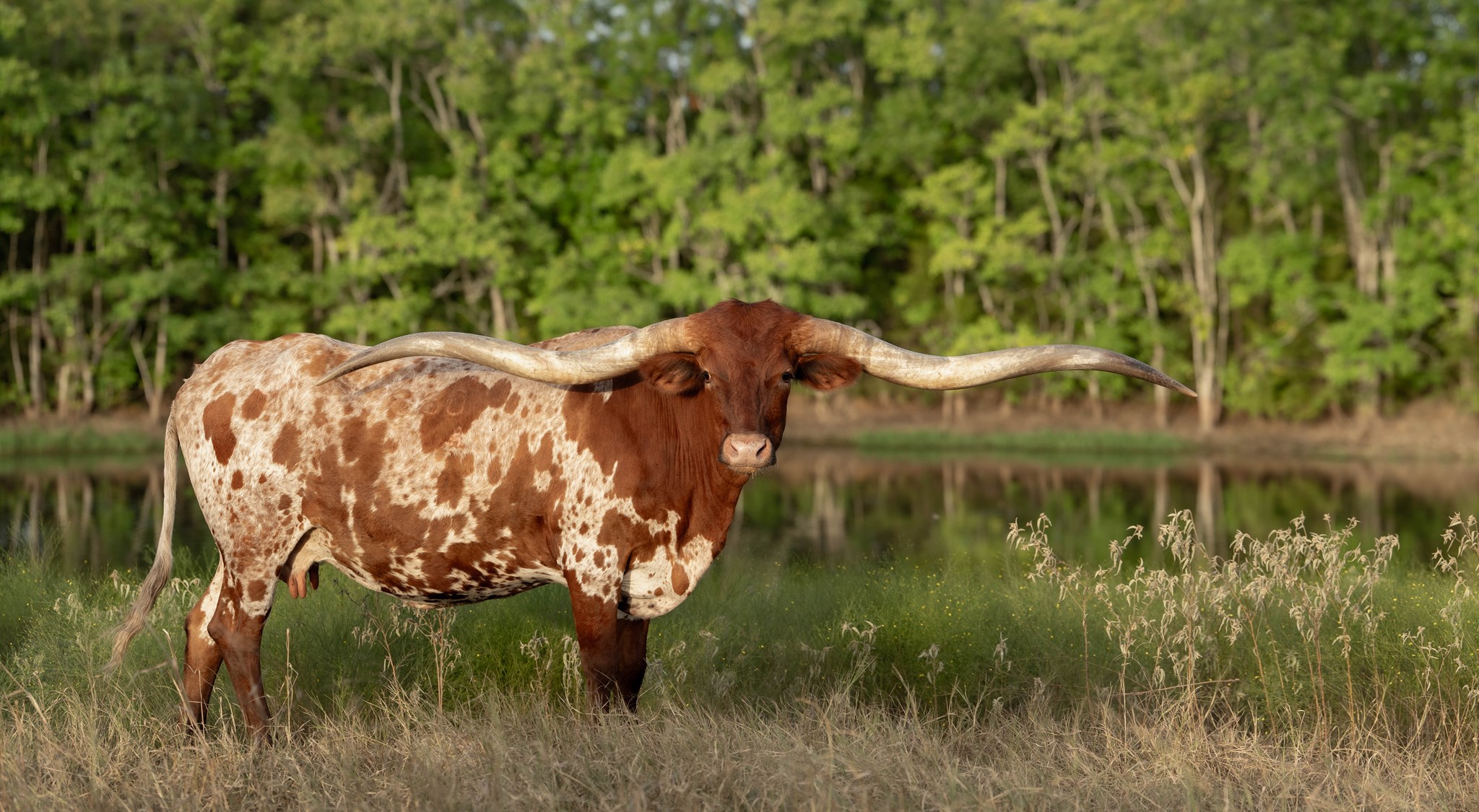
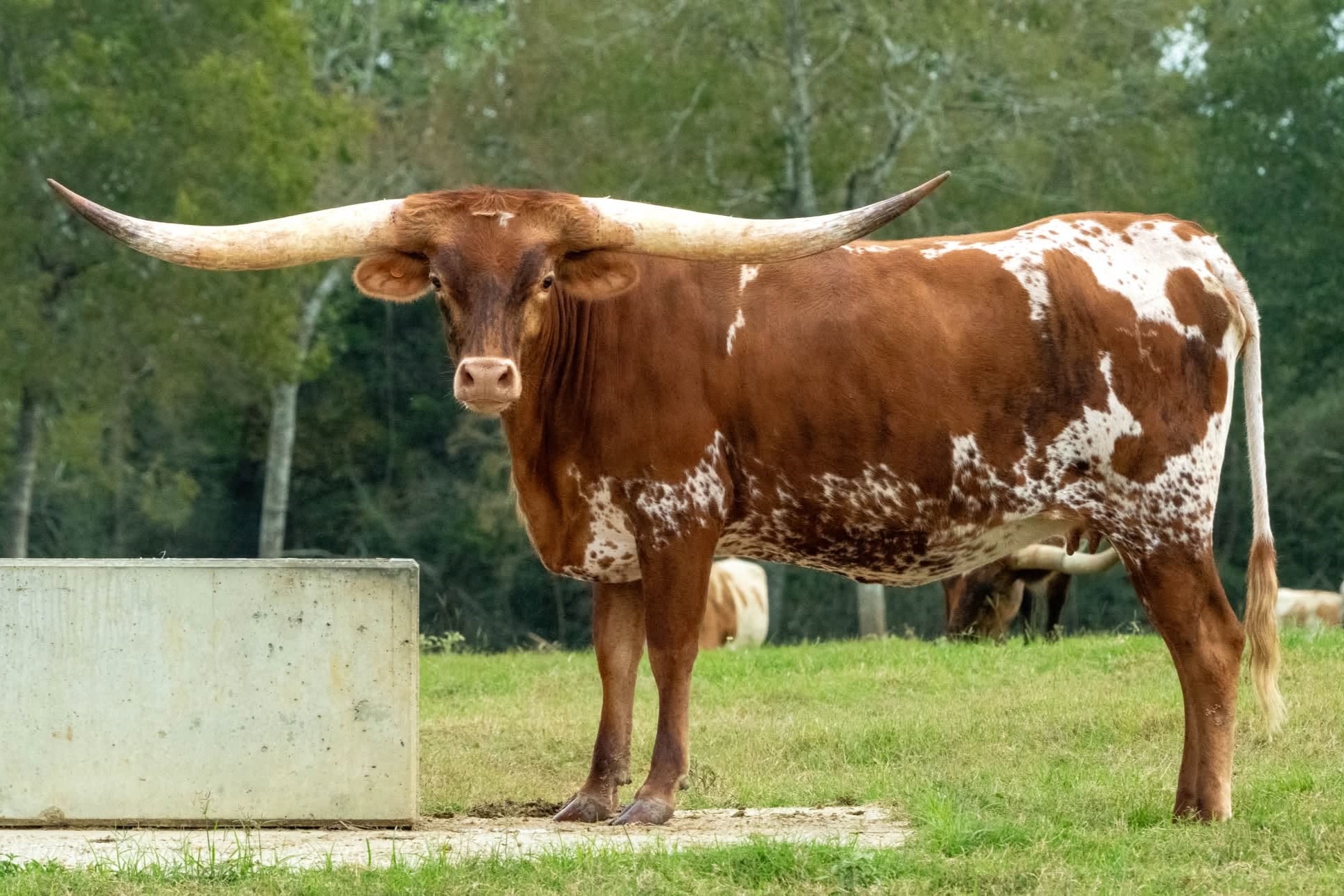
on a whole different level,' he says. 'Twisty, lateral, very feminine. The most feminine cow I've seen. I need to get a heifer out of her
first.'
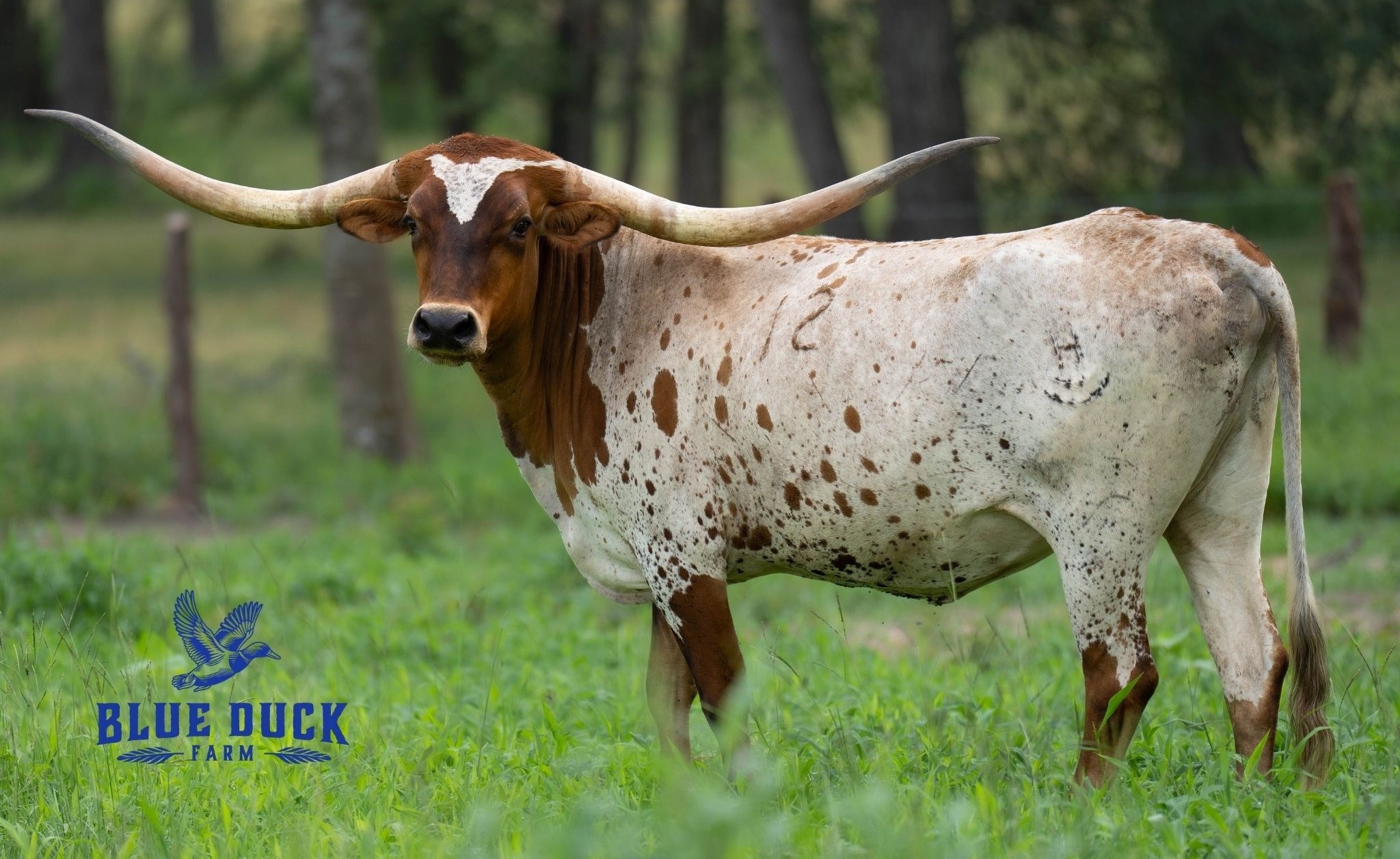
TT Jaguar
Laura is the animal that has been on his radar the longest, he
watched her at a Randy Murry sale from back in Houston, online, and
ended up buying her after the sale closed. He thinks she'll hit a
100" TTT eventually, straight lateral twist. When he
talks about tip to tip, he sounds like someone who has thought about
this carefully and landed somewhere measured: it matters, but balance
matters more. An 85" TTT cow on a smaller frame can be perfect. A
100" TTT cow on a bigger frame can also be perfect. The number alone
doesn't tell you everything.
The Tool He Built for Himself
Scott is, in his own words, a
data-driven person. You can see it in how he approaches a sale; laptop open, working through pedigrees and historical measurements
before he bids. And when he found a gap in the tools available to
him, he built his own.
There
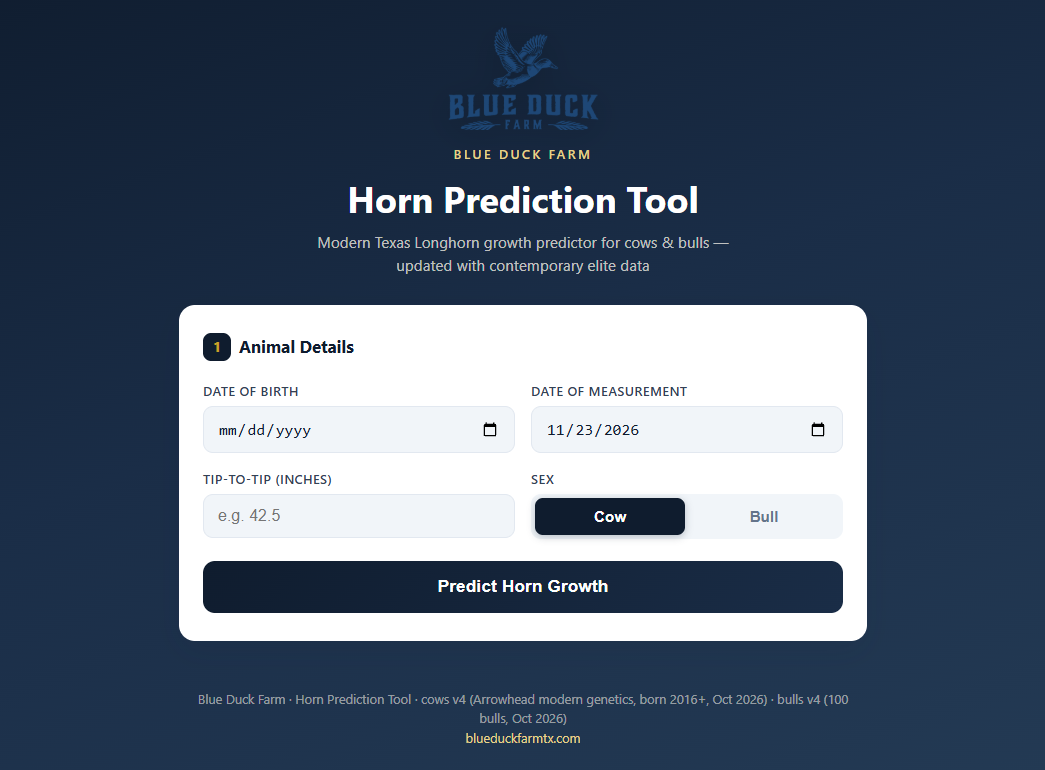
was already a horn prediction tool in the Longhorn industry, but he had concerns about
the underlying data. The methodology was based primarily on
measurements from the nineties, and horn growth trends have changed
dramatically. The percentages of horn maturity at each age are
different now.
'Under
the old tool, a yearling heifer was 43% of horn maturity,' he says.
'And now the data shows they're 36%.'
So
he built his own. He used an AI tool to scrape measurement data from
Longhorn websites and built a predictor that
updates around the clock as the bot continues pulling data. He
refreshes the tool's dataset once or twice a month.
He's
quick to name the caveat: it's a predictor. If the horns start going
sideways, the math won't math. But for a cow whose horns are tracking
straight out, it gives him a baseline for where she could reasonably
end up. He built it into his website partly because he wanted it
accessible while he was browsing, and partly because he thought other
people might find it useful.
The Platform That Suits His Personality
Scott came to Hired Hand
Software the way he came to Longhorns, through other people who
were already using it. Jeremy James and Randy Murry had their
programs online., and when he compared those sites to what he'd seen
elsewhere, the difference was clear.
'You've
made it so easy for new breeders to get to a certain level of
competence on genetics and pairings and all of that stuff,' he says.
'It really suits my personality, the data-driven platform that you
guys have built.'
He
landed on the site early in his journey, well before he had fences.
He describes it as the anchor for being in the Longhorn community; the place buyers go to understand what you're doing, why you're doing
it, and where you're going.
Where He Wants to Be
On an earlier episode of From the Pasture Podcast, Randy Murry of New Age Cattle Company said that the value of a cow is what she produces, and Scott has internalized that. His foundation females are
in his pasture specifically because of what they've done, not just
what they look like.
He
talks about a cow he came close to selling twice. After each of her
calves, he changed his mind. 'It's not my favorite cow in the
pasture,' he says. 'But her babies are unbelievable. So she made the
cut.'
In
five years, he wants a group of foundation females that more often
than not produce animals people would be proud to own. He's not going to futurities right now; his
schedule doesn't allow for it. He sells private treaty and tries to
leave something on the bone for the next buyer.
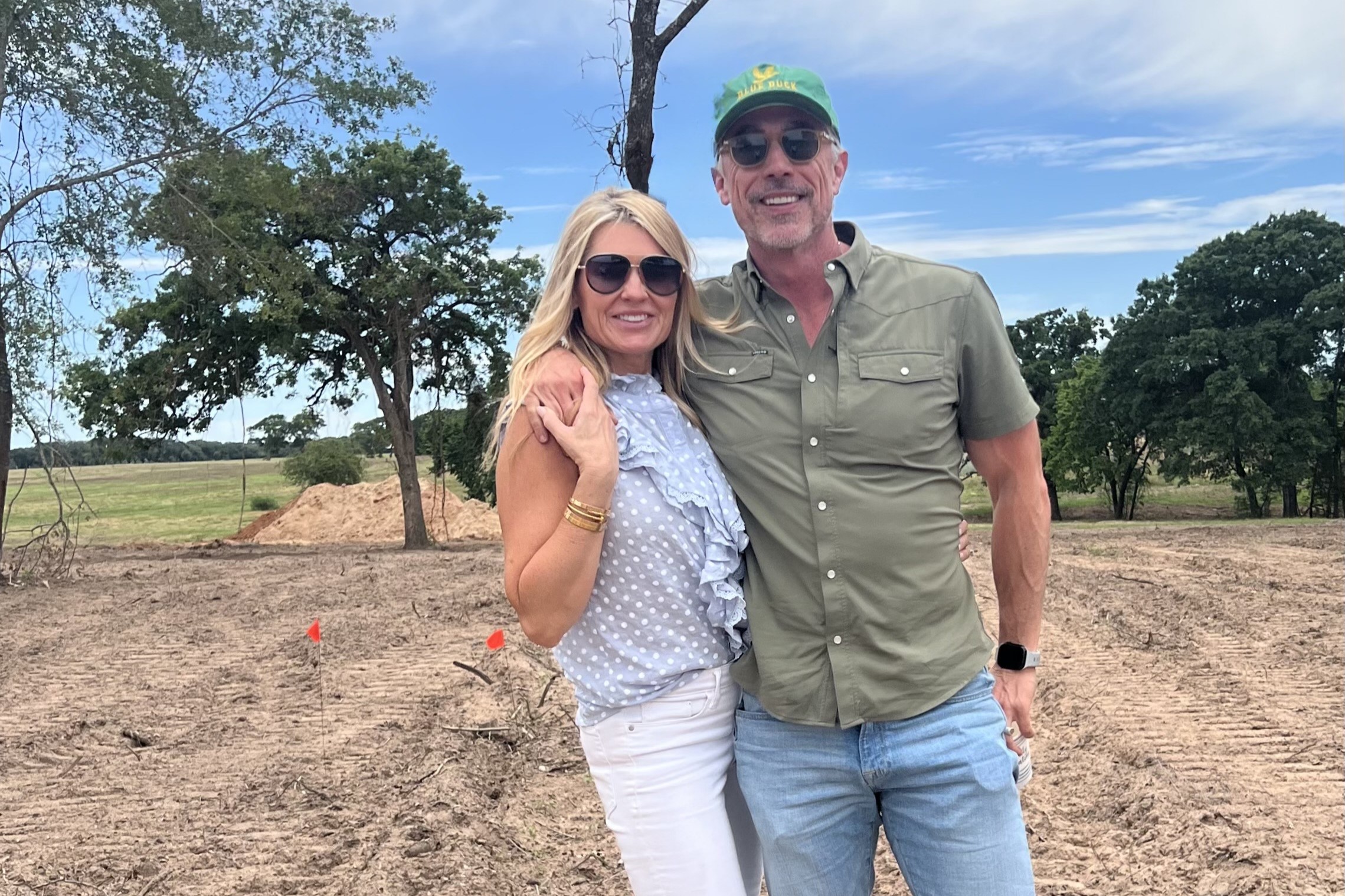
For now, that's the whole plan, build something worth being proud of, and make sure the next person can say the same. Blue Duck Farm is almost two years old now, and Scott Kinsel is exactly where he wants to be.
Find Blue Duck Farms at www.blueduckfarmtx.com.
This article was written based on a podcast interview on From the Pasture with Hired Hand. Listen to the full episode wherever you get your podcasts, or learn more about breeder websites at hiredhandsoftware.com.