by
Hannah Farber
| Nov 09, 2026
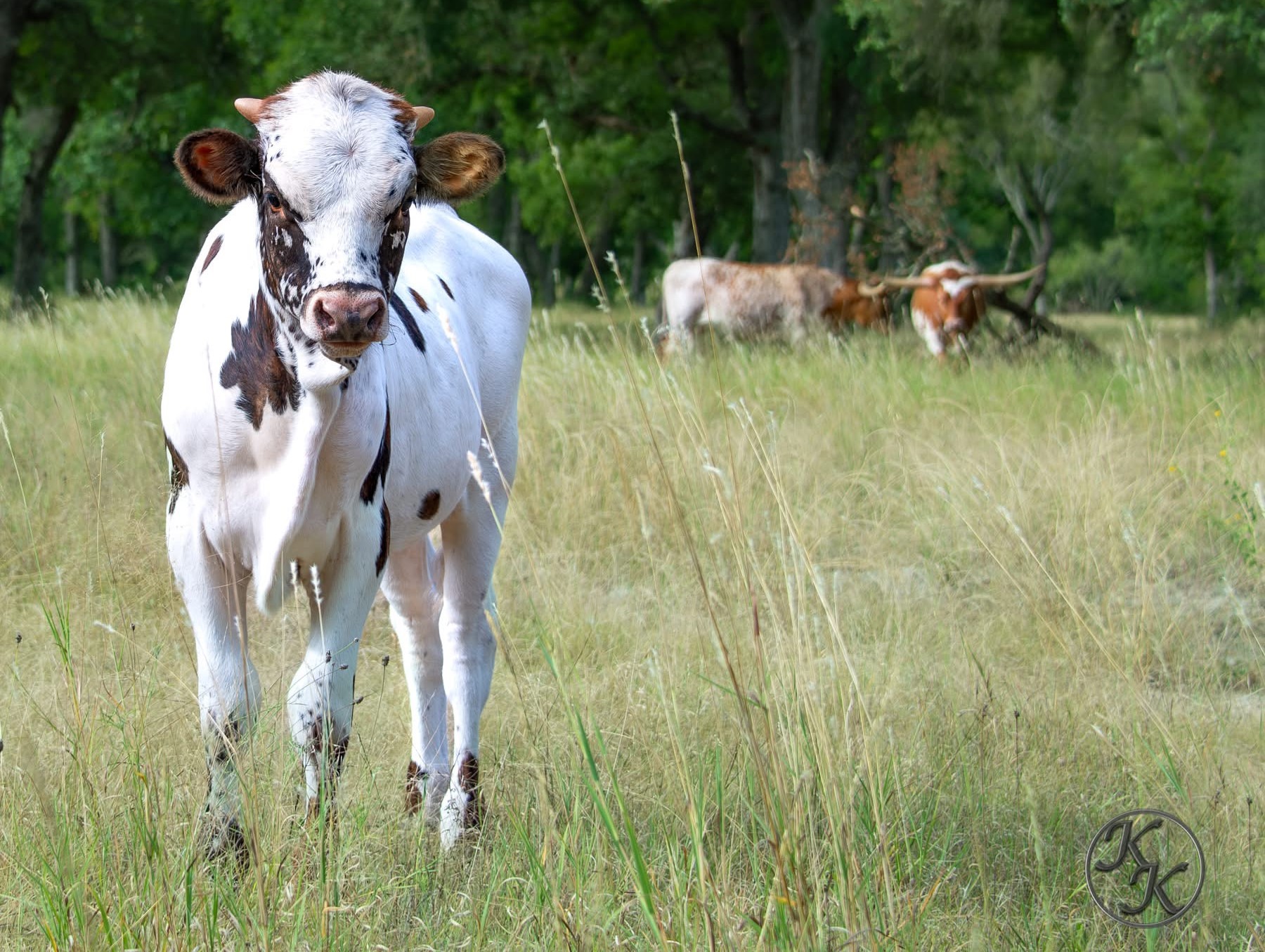
Kathy Palladini did not set out to breed colorful cattle.
She’ll tell you
that conformation came first. A rectangle shape, deep in the body,
strong topline, clean underline. Feminine females with slender faces
and long necks. Large-framed animals, her cows run 1,200 pounds
and up, some pushing 1,400, and she’ll point out that’s not
condition, that’s bone structure. Color, she’ll say, wasn’t
really the goal.
Then you visit
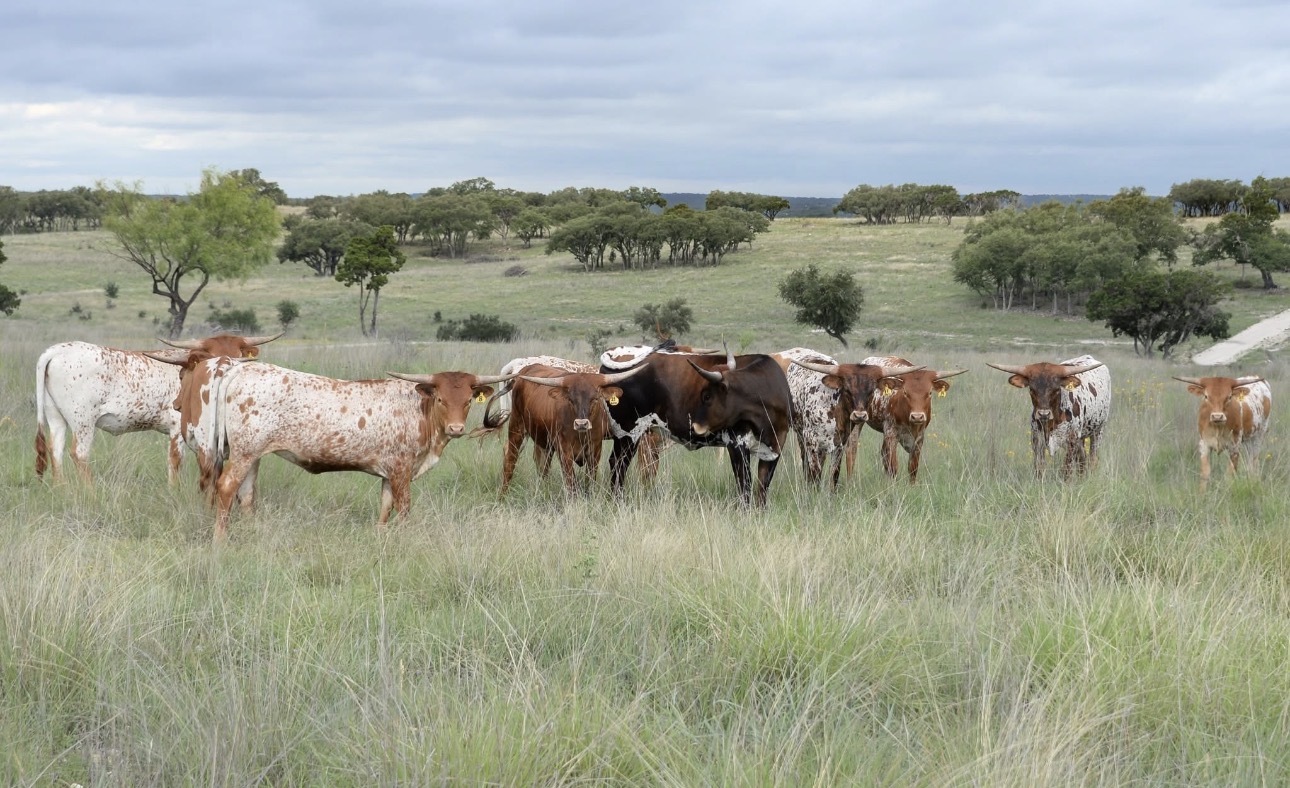
the Double K Longhorns website and you see the herd.
“It just
happened purely by mistake,” Kathy says. “But I do love it.”
DBL-K
Kathy operates out of the Texas Hill Country, where the light is good
in the first two hours of morning and difficult the rest of the day.
She has been registered under the prefix DBL-K for long enough that
she’s watched it take hold in the breed. It didn’t catch on
immediately. The “DBL” for “Double” wasn’t as obvious to
the rest of the world as it was to her, and it took some time, and
some help from Chase Vasut reading the name aloud
at consignment sales, before it became recognizable.
“It probably
wasn’t the smartest thing to go with,” she says. “But it’s
definitely unique.”
Today the prefix
holds. Anyone who has spent time in the TLBAA world knows what a
DBL-K animal is and roughly what to expect from one.
The Rectangle
What they expect comes from a breeding philosophy Kathy arrived at
slowly.
She started with
some Butler-line cows. Smaller-framed animals, some with cool twisty
horns, but not the body type she wanted. She kept going to
futurities, kept watching animals move through the ring, kept pulling
up websites and studying what she liked. She couldn’t always trace
back how she got to where she is now.
“I just kind of
ducked and weaved my way until I got here,” she says.
What she landed
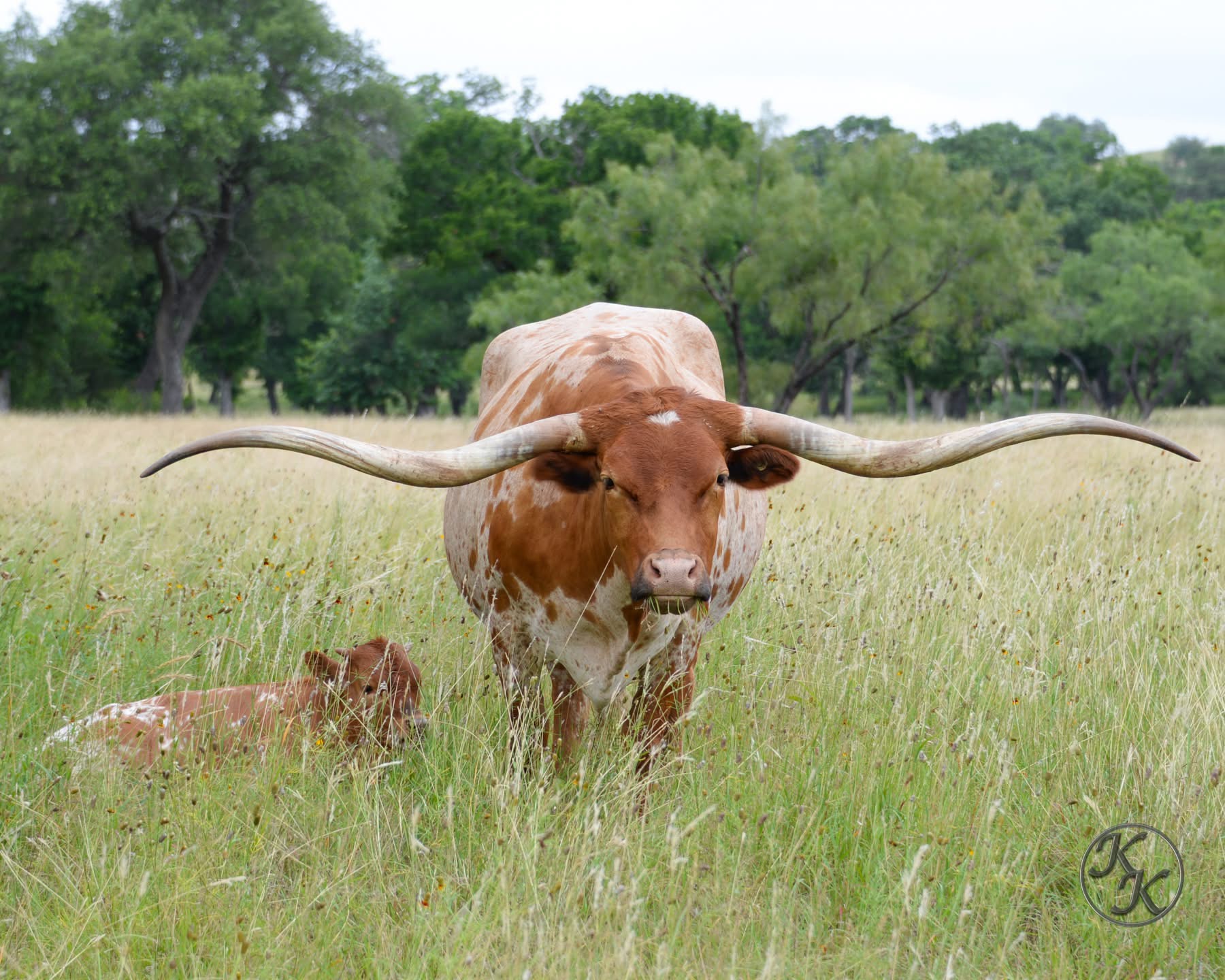
on is an animal that reads almost geometric. The rectangle body:
deep-ribbed and levelheaded, with a strong topline and a clean
underline. Slender face. Long neck. Large frame. These aren’t just
aesthetic preferences. She believes the larger-bodied cow is more
durable, easier fleshing, and better suited to the demands of a
breeding program in the Texas Hill Country. She’ll note that few
breeders around her are selecting for the same body size.
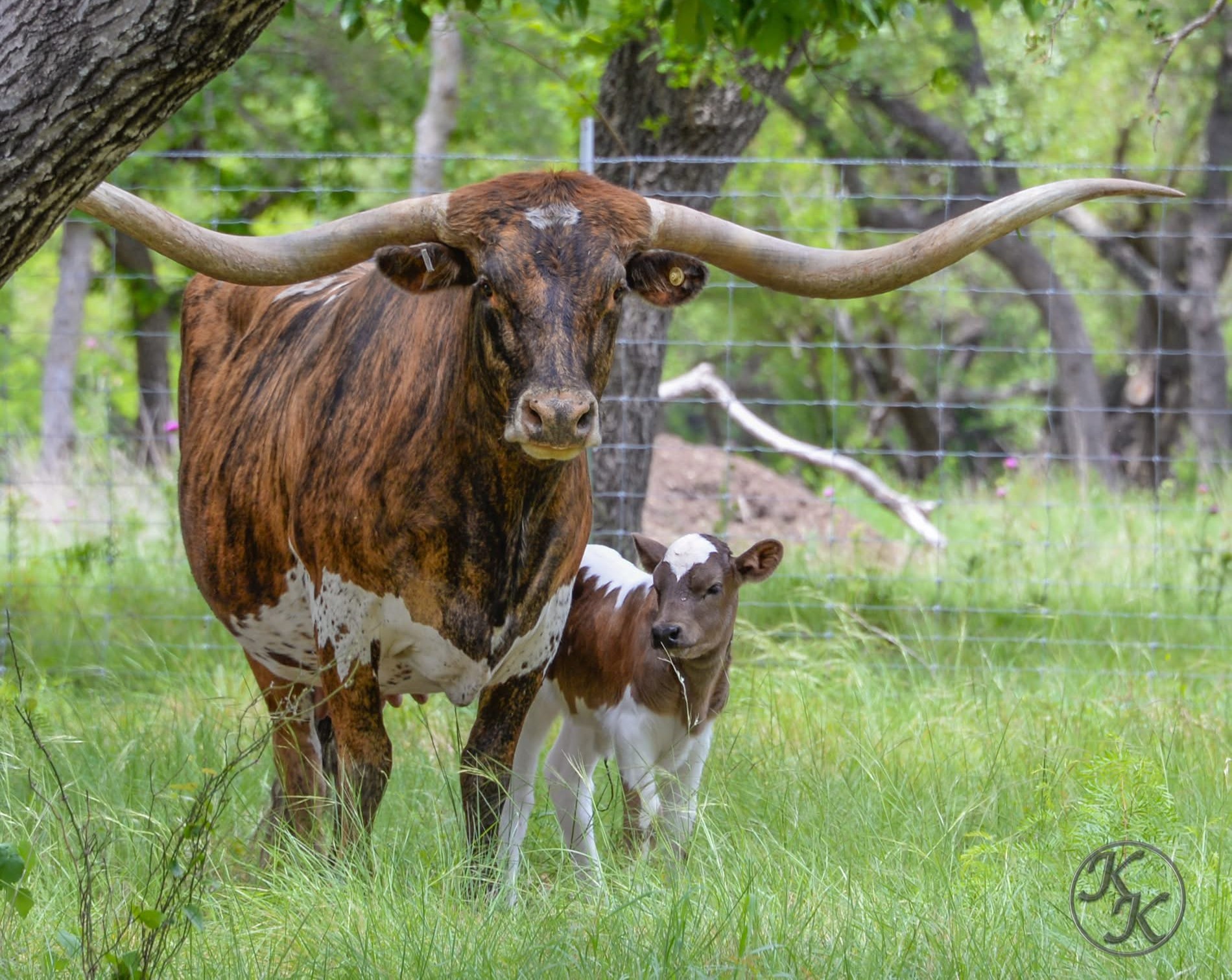
The color followed naturally, almost as a byproduct. When she began testing for the color gene, she found several animals carrying the wild gene, which predisposes a line toward brindle and parker brown patterning. Now she uses the results practically: when selecting bulls, when making breeding decisions, when a solid-red purchase arrives and she pulls a DNA sample the first day and discovers she has a wild-gene carrier under a plain coat.
“Sure enough, she carries the wild gene,” Kathy says of a recent acquisition. “She’s young. There’s a chance she’s gonna brindle, but even more so, there’s a chance she’s gonna pass that on.”
The Test
Kathy has been DNA testing for four or five years, and she came to it
through Kevin Bryant, who pointed her toward beef
trait testing alongside the parent verification and color testing she
was already doing. The Neogen process is straightforward: an ear
punch at weaning, a submission, results back in about a month. She
uses Neogen directly and also works through the TLBAA.
The color panel
shapes her bull selection. The beef trait results, ribeye area,
marbling, tenderness, tell her what to do with her feeder steers.
The maternal trait panel hasn’t required much intervention because
she’s already culled the problem animals over the years, but she
has the data.
Her advice to
breeders who haven’t started: it’s easier than it sounds. You
need an ear punch and the supplies from Neogen. From there, you send
it in and wait.
She doesn’t
look for the testing when she’s buying, because not many people in
the Longhorn world have done it yet. But the first thing she does
when a new animal arrives is pull a sample.
The Futurity Ring
Kathy’s relationship with futurities was shaped in part by the time
she spent with Nancy Dunn of Rolling D Ranch before she ever competed herself. She
watched, went to sales, studied what animals Nancy selected and what
happened to them in the ring. She attended at least ten futurities
before she entered her first one.
When she finally
did compete, she took a variety of animals. Some did well. Some did
not. And twice, an animal landed at the bottom of the class.
“Somebody has
to end up there,” she says. “And it was me a couple of times. And
that’s okay.”
What she learned
from one of those last-place finishes eventually changed how she
thinks about the whole enterprise. The heifer who came in dead last
in the ring, the one that was devastating to her at the time,
has become one of her strongest producers. She has given Kathy herd
sires and daughters and granddaughters. Her value had nothing to do
with how she stood in front of a judge on one particular afternoon.
“Not all
animals are futurity winners,” Kathy says. “They may still have a
ton of value in your herd. Just not necessarily in the futurity
ring.”
She still gets
nervous before her animals enter the ring. She calls her friends
beforehand. She sends pictures, asks whether she should take this one
to town. She does it partly to gut-check herself against what she
calls “barn blind,” and partly because even now, after years of
competing and watching, you never really know what an animal is going
to do in an unfamiliar environment.
Winnin' Streak
The most important cow in the Double K herd right now is not the kind
of animal you’d necessarily pick out at a glance.
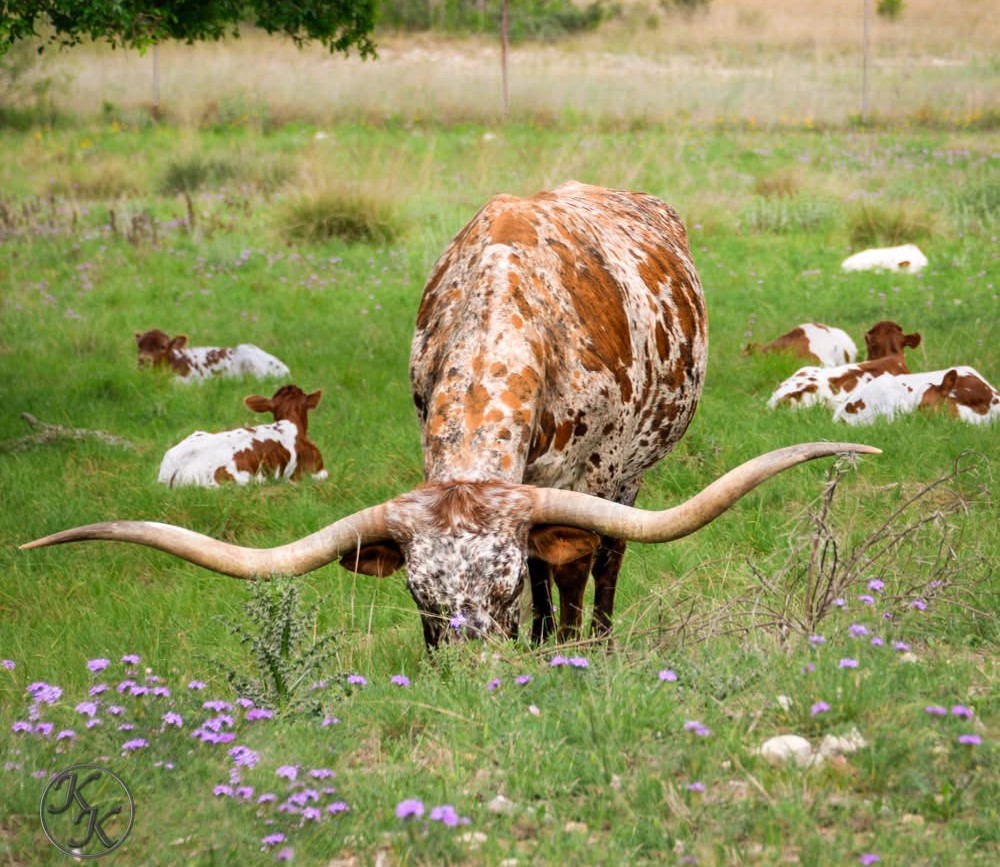
Winnin' Streak came to Kathy almost
accidentally, at the side of a cow she purchased for not very much
money. She doesn’t crack 75" TTT of horn. She doesn’t look like
the obvious star of the program.
“If you were to
see her in my herd, you would say, What is she doing there?”
But she
outproduces herself no matter which bull Kathy puts her with. She has
given Kathy herd sires and daughters that have become serious animals
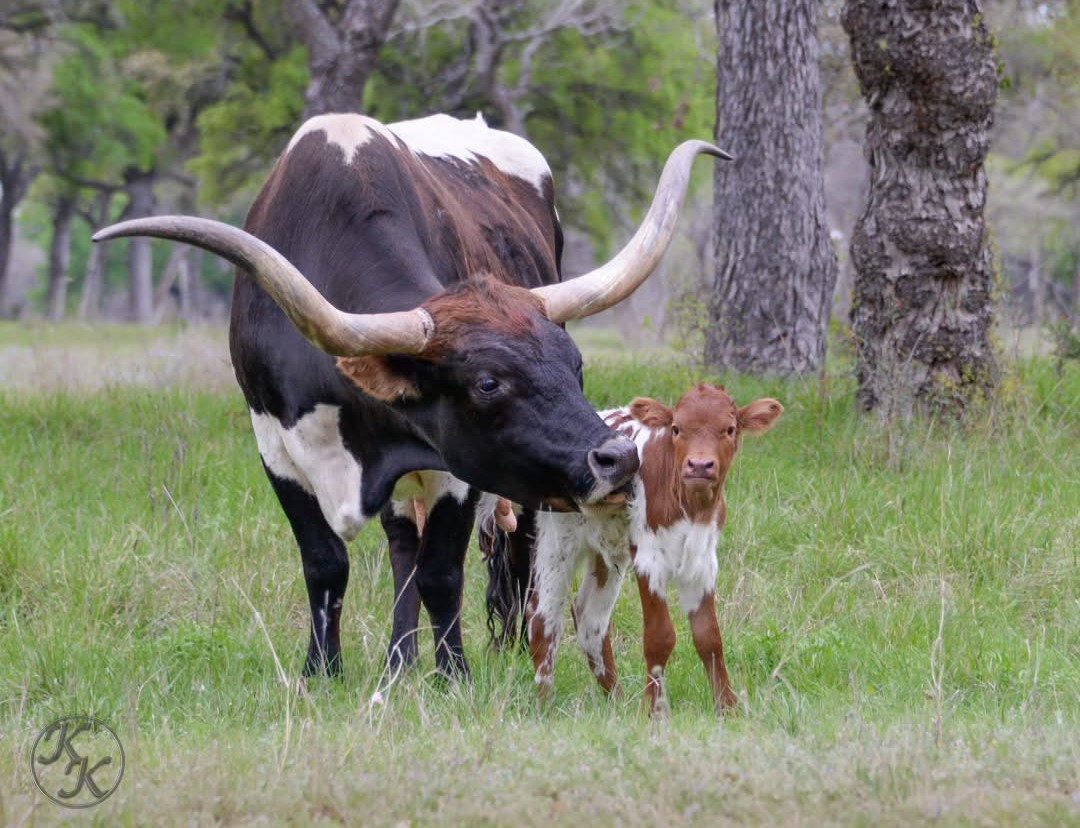
in their own right. Her first daughter, DBL-K Winnin' Highness, is out of Dunn Aces High, Kathy’s first
bull, a Fifty-Fifty BCB son she bought from Nancy Dunn and still holds a
partnership on today. Winnin' Highness is running at 95" TTT of twisty horn. She is, by Kathy’s description, absolutely beautiful.
Winnin' Streak is
Kathy’s favorite cow in the pasture. She says it plainly.
What the Camera Teaches You
Keith bought Kathy a camera a year or two before they purchased their
ranch. She spent the early days photographing whatever was
accessible, which was mostly whatever moved through her backyard.
When she got into Longhorns and started studying other breeders’
websites, she realized quickly that the quality of the photography on
those pages mattered. She started bringing the camera with her into
the pasture.
She uses a Nikon
D610, on the recommendation of Brett Krause of Circle K Longhorns, whose
work she had admired enough to reach out to him directly. She has a
telephoto lens. She could not tell you much else about the technical
specifications. She just knows what the equipment can do.
Her rules are
simple and consistent: get the photo in the first two hours of the
morning, because the harsh midday light will ruin it. Shoot
eye-level, not down at the animal. Keep the background clean. A power
line in the distance, an old gate leaning against the fence, another
animal’s head in the frame; all of it draws the eye away from
the subject. For sale catalog photos, she’ll go out for days in a
row taking hundreds of shots until she gets the one.
What the lens
taught her, which she did not expect, is that it shows her things she
misses when she’s standing in the pasture. She’ll be framing an
animal and realize she’s struggling to get a flattering shot, and
then understand why.
“It wasn’t
until I had the camera,” she says. “And I’m like, yeah, she
does have that, doesn’t she?”
She photographs
the artistic shots and the website shots completely differently. The
website photos are broadside, all four legs visible, head turned
toward the camera. Everything the buyer needs to evaluate an animal.
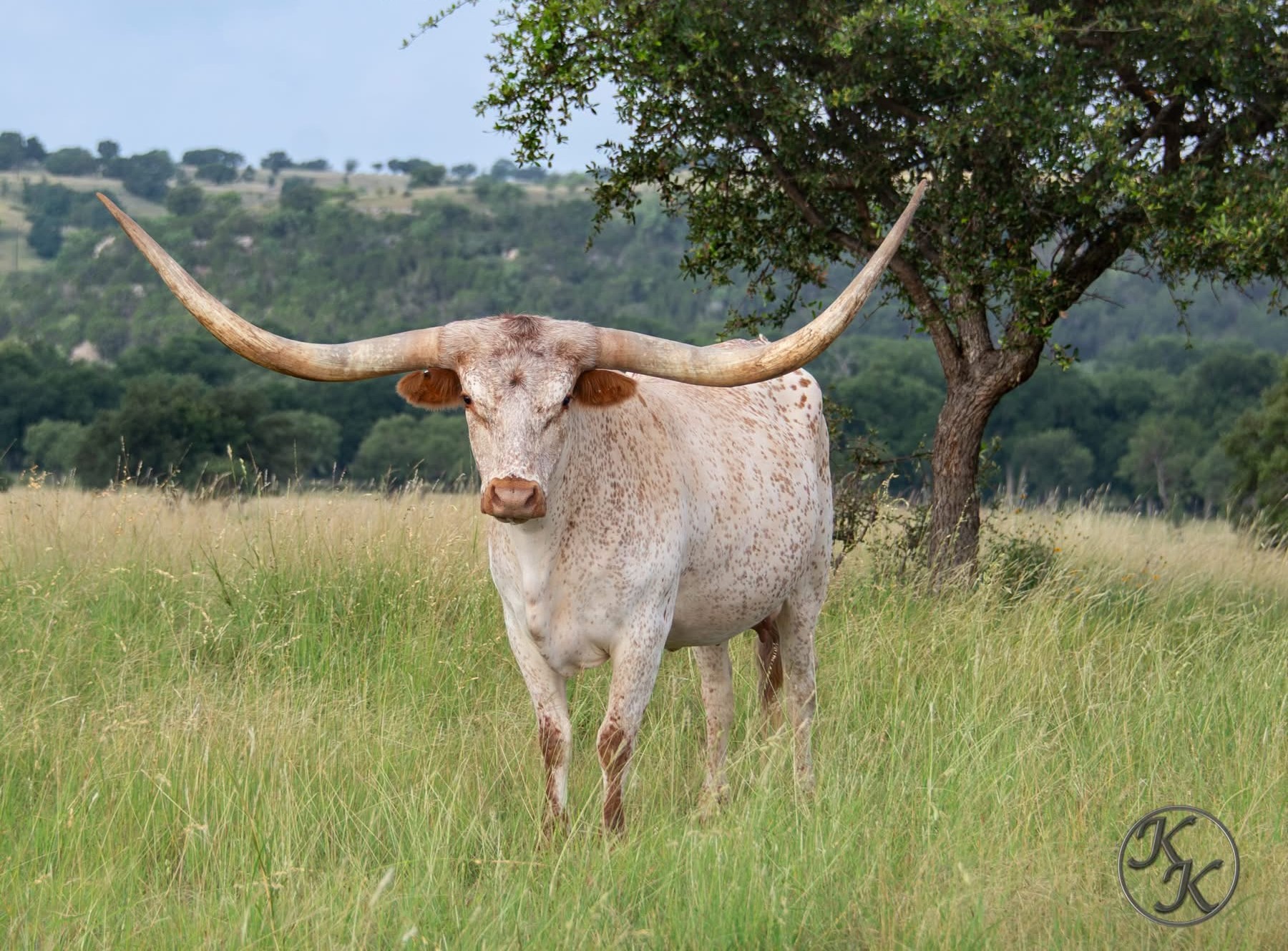
The artistic shots are something else: early morning stillness, a
mother and calf in the quiet before the day starts, the feeling of
the Hill Country at sunrise. She does not go out specifically to get
those. She goes out and sits with her cattle, and then she notices
something.
The Canvas Page
The canvas art side of the business started without a plan.
People started asking for high-resolution copies of her photos to print on canvas. Then people
on Instagram outside the livestock world found her work and asked.
She started getting requests she hadn't expected. She added a page to
her website and made the photography available for print.
Artists have reached out to
ask whether they can paint or sketch from her images. A woman in
Friendswood, Texas paints them onto furniture: wooden benches, wooden
doors. Kathy says she will flip through Instagram and find a
photograph she took rendered onto a piece of home decor, and it is
one of the more rewarding things she's experienced with the camera.
When she's talking about the site itself, she'll tell you the feature she relies on and doesn't
hear discussed enough isn't the canvas page, it's the cross-website
search. "I use that a whole lot," she says, "especially
when I'm searching for a bull or something. I just don't hear people
talk about that nearly enough. It's a great tool."
Still in the Pasture
Kathy would like to keep
producing females that other breeders want to add to their herds for
as long as she's physically capable of doing it.
She'll tell you she didn't
come by the most efficient route. That's okay with her. She's sold
animals she wishes she hadn't, and she's bought some of them back,
and she'll buy back at least one more in a few years when the price
comes back down. She has original cows in the pasture that trace to
the genetics Stockton/Burton Ranches helped her build
her foundation on, back when Cathy Hawke of Sky Ranch Longhorns first made that introduction.
Those genetics are still there, still showing up.
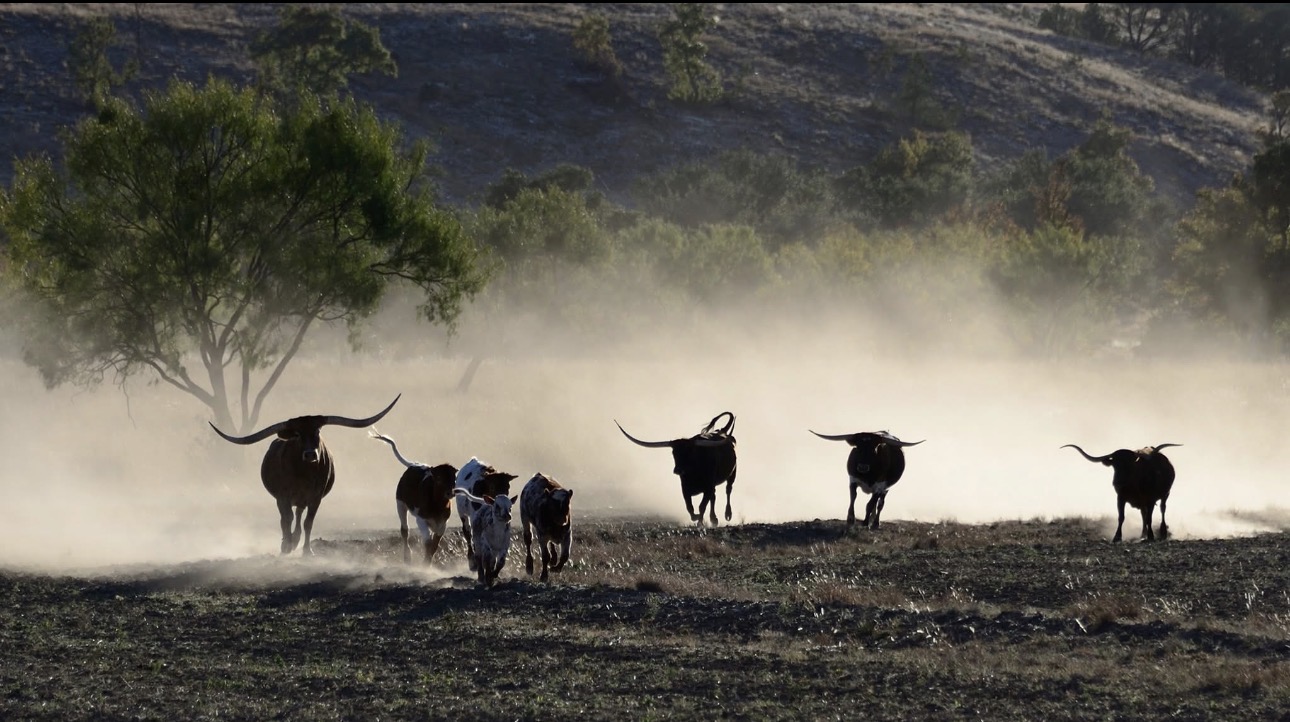
She goes out early on May
mornings, when the light comes in clean and the Hill Country is at
its best, and she sits with her cattle. Sometimes she picks up the
camera. Sometimes she just watches.
"There's just something
about cows first thing in the morning," she says. "I don't
know that it makes sense, but that's what I try to capture."
Find Double K Longhorns at www.doubleklonghorns.com.
This article was written based on a podcast interview on From the Pasture with Hired Hand. Listen to the full episode wherever you get your podcasts, or learn more about breeder websites at hiredhandsoftware.com.