by
Hannah Farber
| Sep 21, 2026
Reid Tolar didn't want anything to do with cows.
He had grown up with them. His great-grandfather was a dairy farmer, his grandfather switched to commercial beef, his father bought the operation when his grandfather retired. By the time Reid was old enough to form an opinion, he had formed one: he was not interested. The cows did not like you, you did not like them, and the whole arrangement required more patience than it was worth.
Then he and Ashley got married, bought some property, and spent two years bush hogging pastures every weekend.
"When I grew up, we had cows and they kept the pastures mowed down for us," Reed says. "Why don't we get a few cows and just help us with the maintenance of our place?"
Ashley had one condition: nothing normal. Not commercial beef, not what everybody else in central Alabama had, something different.
They chose Texas Longhorns. They bought three bred cows from Terry King down in the Florida panhandle, at a SETLA event where Reid saw the first one and knew immediately. Her name was Little Pistol. Those three had their calves, and Ashley fell in love with it. She has not slowed down since.
What Four Generations of Cattle Country Teaches You
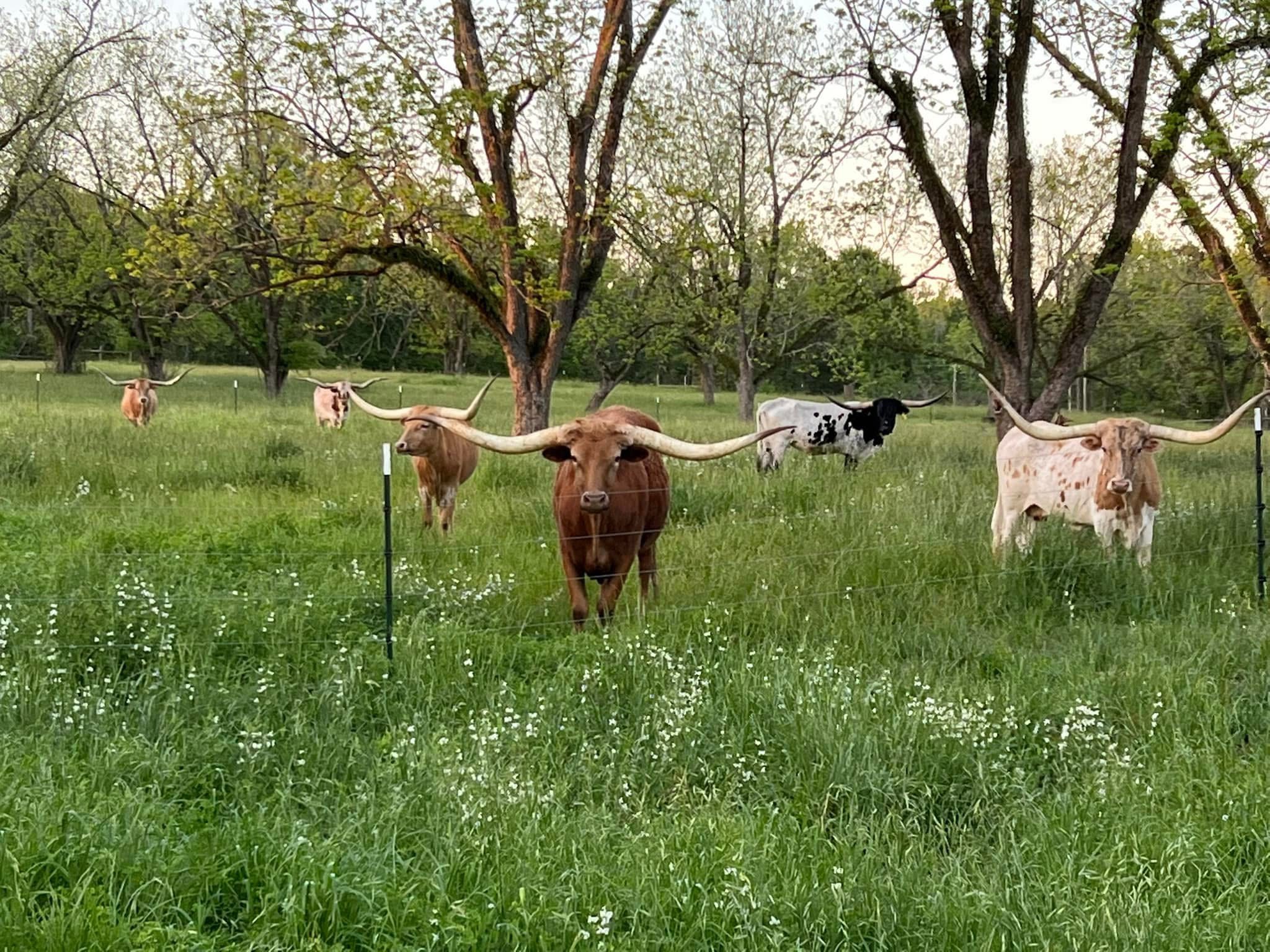
Tolar Longhorns operates in Prattville, Alabama, just outside Montgomery, on land that sits inside a pecan orchard with over 400 pecan trees. Reid and Ashley run the cattle in the pastures between them.
The family's cattle history goes back four generations in Alabama, but registered Longhorns are something entirely new to it. Reid's grandfather ran a large commercial operation that was, by Reid's own description, very hands-off. The cows went wherever they wanted and they got worked once a year. Other than that, they were left alone, and they let you know it.
"They didn't like you, they didn't want you around," Reid says. "And so I was always nervous about Longhorns because they had weapons on top of their heads."
The first Longhorn bull he ever saw was Fifty-Fifty BCB, in Nancy Dunn's pasture. Reid walked right up to him and the bull didn't even stand up. He just looked at the people in his pasture and went back to what he was doing.
That was the moment Reid understood what he had gotten into, and what his grandfather had been missing all along.
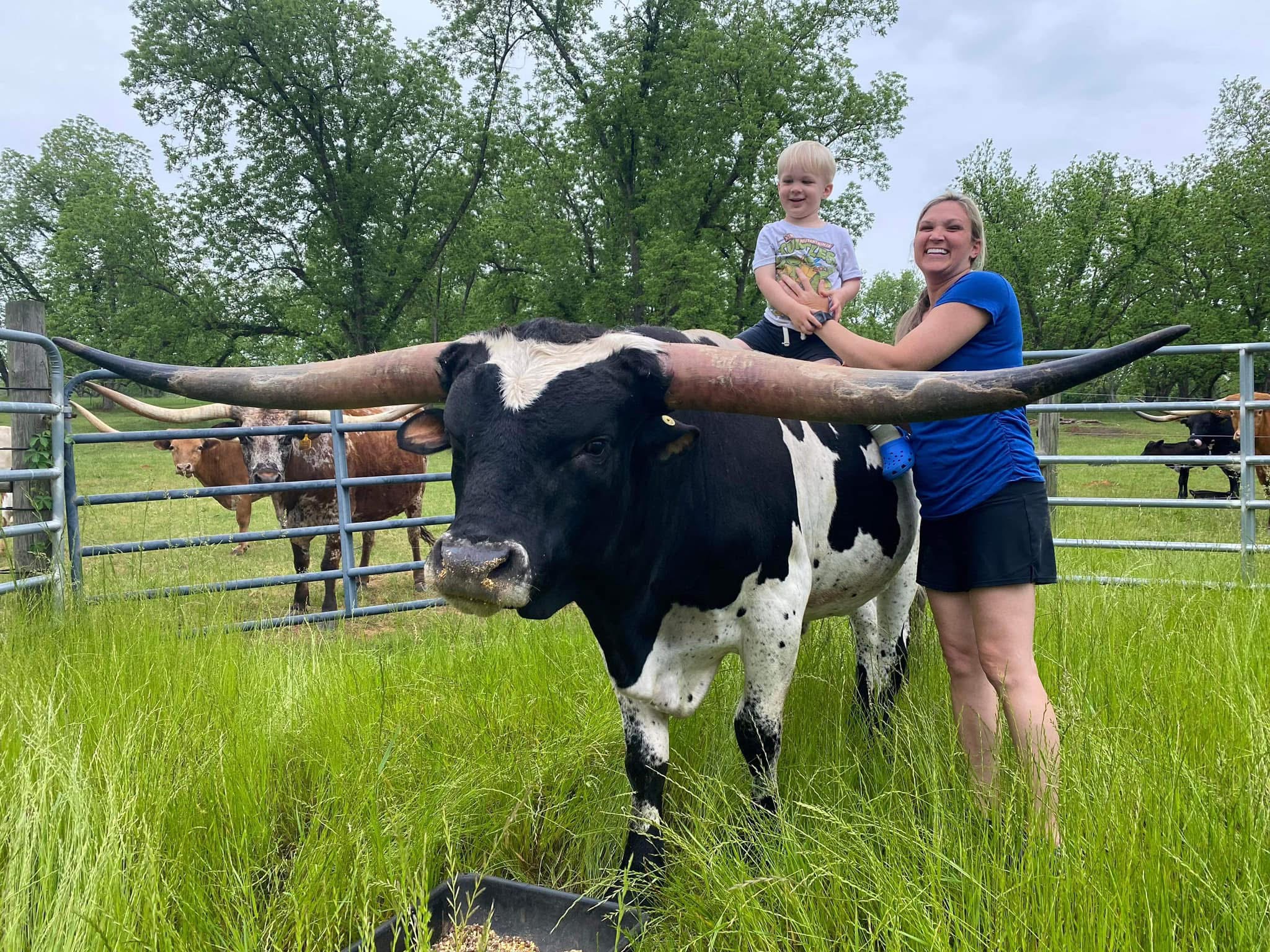
Reid and Ashley are in the pasture every day. When he leaves the office, Ashley and their four-year-old son Watson are ready in the side-by-side. They go out together, feed the herd, take pictures if the light is right, and wind down the day the same way they wound it up.
The Trophy Steer Side of Things
Tolar Longhorns runs two herds. The registered breeding herd at the house sits at 50 to 60 head. Down the road is the beef herd, also 50 to 60 head, where the culls go and where the steady cash flow comes from.
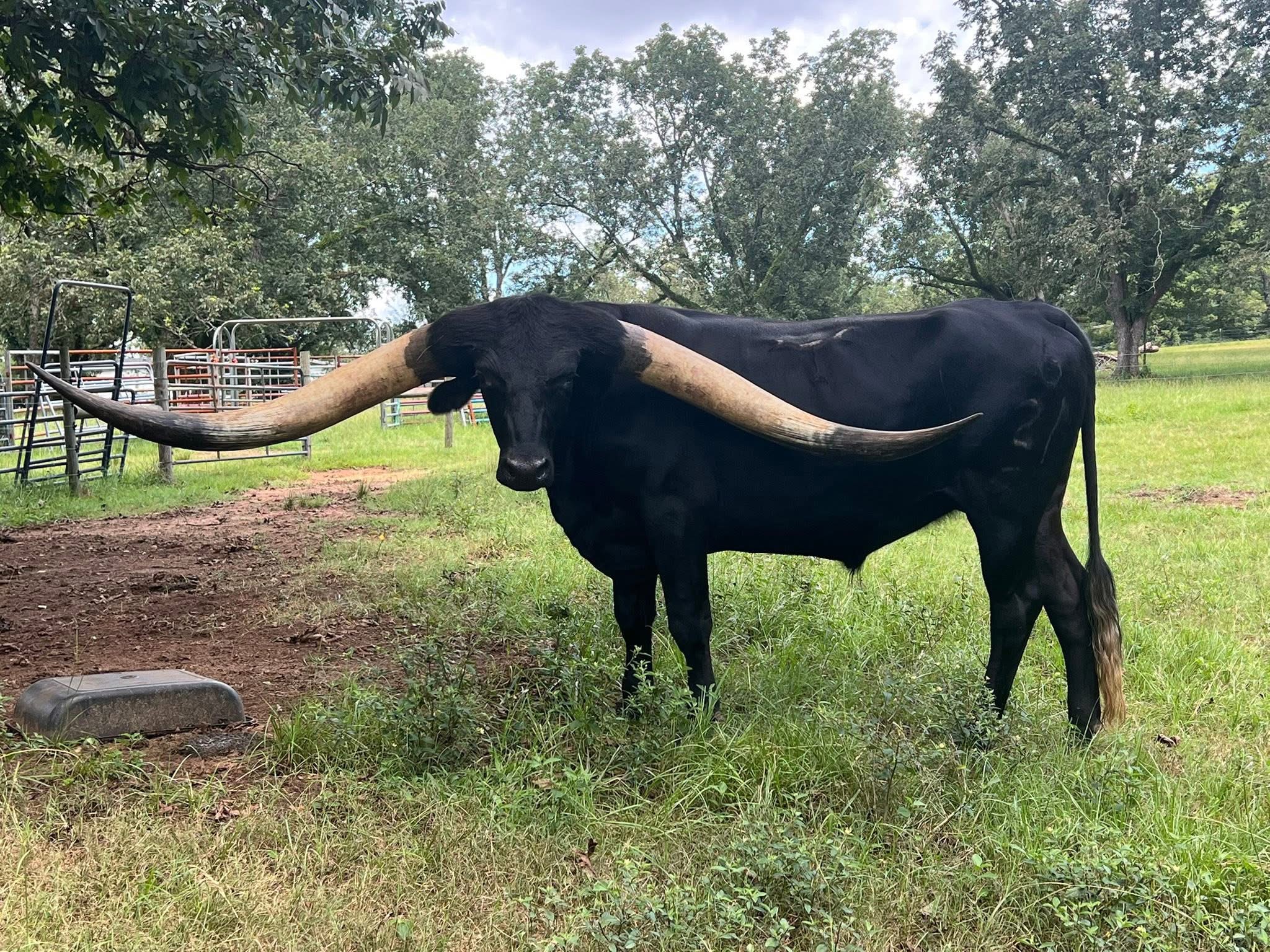
But the part that makes Tolar Longhorns unusual is the trophy steers. Ashley loves them the way Reid has come to love the breed itself: immediately, completely, and without a lot of explanation needed.
There is a pasture at the house with about ten large trophy steers in it. Next to it is the junior pasture, where the younger ones go to grow through what Reid calls the awkward teenage stage: horns pointing in the wrong direction, legs too long, the whole goofy in-between phase before everything starts to come together.
Reid tries not to look at them too much during that phase, but Ashley has the patience for it. She is the one who tells him to hold on, give them another season, wait and see what they become.
"She helps convince me," he says.
The trophy steer program has become a real business. Tolar Longhorns has sold steers to wedding venues, party barns, and families who want something beautiful in the front pasture. Santa has stopped by more than once to pick up steers for Christmas morning deliveries. Ashley's dream, if money were no object, is more land so she can have more trophy steers. She is working on it.
Building the Breeding Program
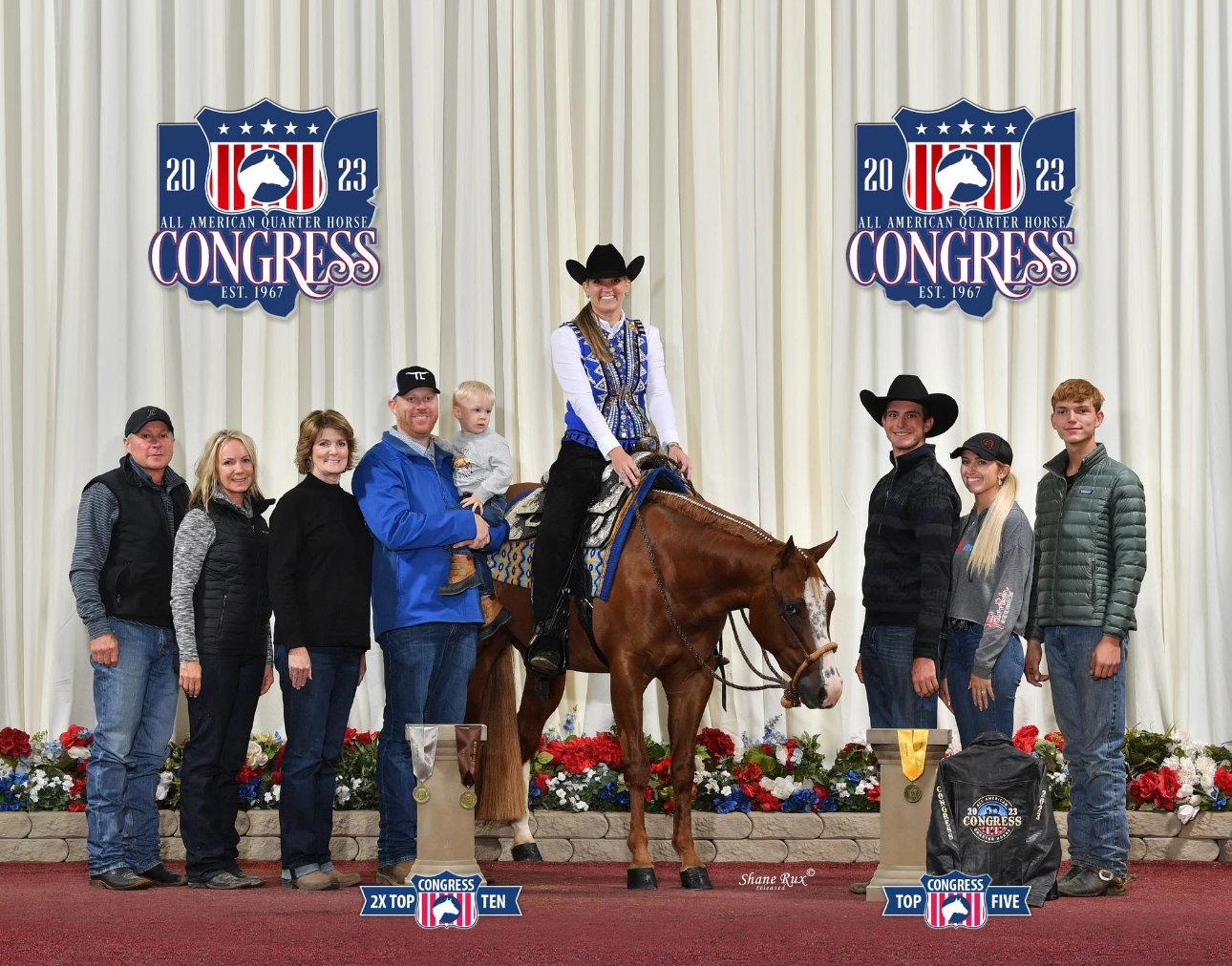
Ashley's background is in horses. She rode on the Auburn equestrian team, won a national championship, and has spent her entire life reading conformation. It took one look at a Longhorn and she already knew what she was seeing.
"They all look like big fat quarter horses," she says. "But they're pretty."
Reid can walk into the pasture with her and predict, before she says a word, exactly which animal she is going to go for.
The breeding philosophy at Tolar Longhorns starts with production. Good milk, solid body, a mama cow that earns her keep. Prettiness matters, but it cannot come without a strong mother first. Disposition is not optional either. Watson is out there every day, so if an animal shows any aggression, it does not get a second chance.
"No second chances at old Tolar Longhorns," Reid says.
The genetics have come from a wide range of programs: Rolling D Ranch, Pace Cattle Company, Hoosier Longhorns, Hubbell Longhorns, G&G Longhorns, Bull Creek Longhorns, Dreamwood Farms. Reid and Ashley have made a habit of pulling from wherever they see something they like rather than locking into one bloodline.
Their current herd sire is N8ive Charlie Horse, an Eagle Texas son they partnered on with Hoosier Longhorns. They were visiting the farm, not planning to buy anything, when Ashley spotted him in the pasture. He was bigger than every other animal around him and she could not stop looking. On the drive home, they both said the same thing at the same time.
They called back and arranged the partnership.
Charlie Horse is four years old and is over 90" TTT. His dam N8ive Dreams and her mother Native Beauty 50/50 are both over 100" TTT. He does not lack horn or size, and he is already putting leg under the calves in a way that has Reid and Ashley paying close attention.
The nicest animal they have produced so far is a heifer they call Peaches. Her registered name is Tolar's Peach Pie, which is a credit to Watson, who named her. She is coming up on two years old, full-bodied, good twist developing, long legs up under her. Reid calls her the nicest thing they have raised.
The heifer from this year's calf crop that has them most excited is Dark Diamond, a dark Parker Brown heifer out of Charlie Horse and a PCC Dark Knight daughter from Pace Cattle Company. She is a special one.
They have also partnered with Pace Cattle Company on PCC Spirit In The Sky, a PCC Midas Touch son who Scott, Megan, and Tytan say might be one of the best bulls they have ever raised. He is not yet two years old and is already on some of the younger heifers at the house. Reid and Ashley are watching closely.
Cows as Savings Accounts
Reid has an agricultural economics degree from Auburn and a law degree from Birmingham School of Law. He does estate planning and financial law, and he has been practicing for 14 years.
He sees the cattle through that lens. The cows are, in his words, little savings accounts walking around in the pasture. Assets that produce more assets. If you need cash, you process one or take it to the stockyards. The beef herd provides steady income while the registered herd builds. The trophy steers provide the upside.
"Whereas it would take a commercial beef operator five to ten animals to reach that same price that a high-quality Texas Longhorn could bring," he says.
He does not advertise at Longhorn events that he is a lawyer. He has found that it colors how people see him before he has had a chance to show them otherwise. The word he and Ashley chose when asked to describe what they want Tolar Longhorns known for is honest. It is the same standard he holds his law practice to.
"We will make it right," he says. "That's just very, very important."
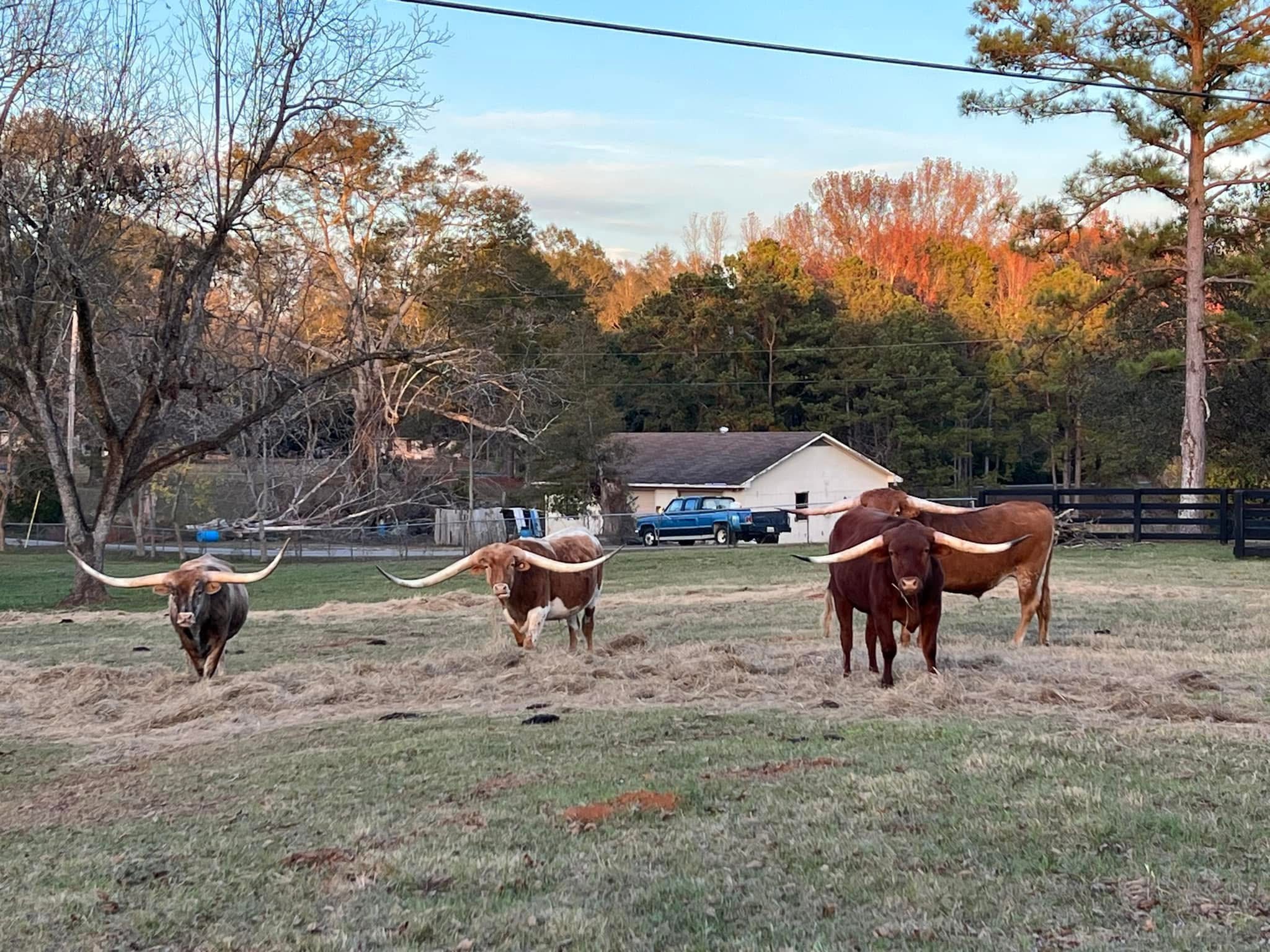
Ashley manages the Tolar Longhorns website and has made a habit of doing it properly. She is particular about pictures: back straight, tail down, no open mouths, no awkward angles. She makes Watson run around and quack like a duck to get the cattle to pick their heads up. Reid sometimes has to quack too. When she spots an animal for sale on Facebook, she researches the farm, pulls up the breeder's website, traces the pedigree, and calls Reid when she has found something worth buying.
"He likes to joke and say that I'm home all day buying cows on the internet," Ashley says. "And I might say, hey, I just bought a cow in Texas. We got to go pick it up."
Find Tolar Longhorns at www.tolarlonghorns.com.
This article was written based on a podcast interview on From the Pasture with Hired Hand. Listen to the full episode wherever you get your podcasts, or learn more about breeder websites at hiredhandsoftware.com.