by
Hannah Farber
| Aug 11, 2026
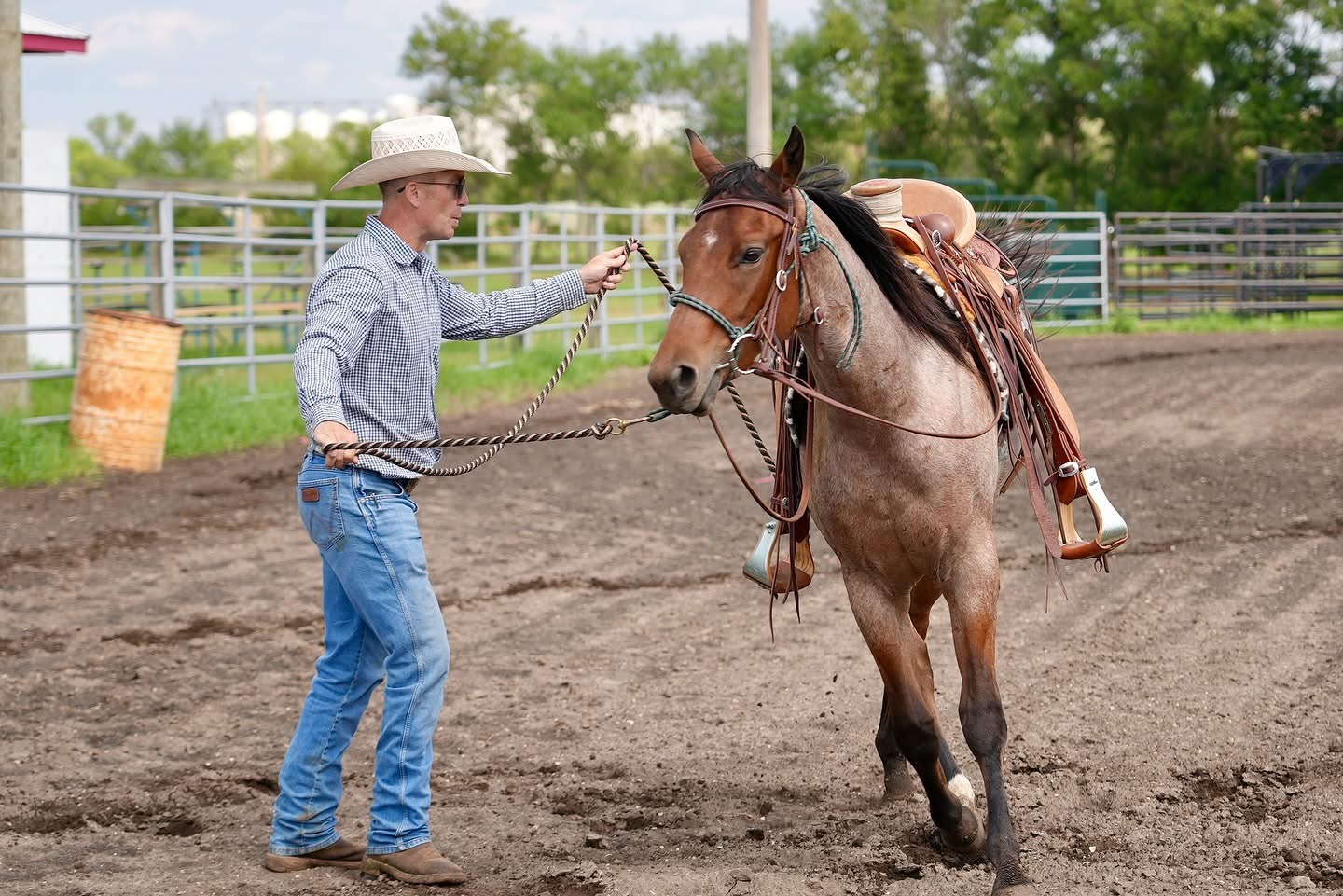
Cody Robbins sold his commercial herd in 2008 and never looked back.
He had been roping cattle for years, building a small commercial herd strategically so he always had animals to rope without buying new ones every season. Then he and his wife Kelsy started a hunting television show and there was no time to rodeo anymore. He was still trying to find the right market for his calves when the door opened from an unexpected direction.
At a hunting trade show, a registered Longhorn breeder noticed something: Cody always had a Texas Longhorn cow standing behind him in his show's opening. He offered to take Cody out to see his registered animals at six in the morning before the show opened.
Cody went home and sold his commercial herd immediately.
The Land He Wouldn't Hunt
In 2013, the same year his first daughter Berkeley was born, Cody and Kelsy started buying land in Saskatchewan. A quarter section here, another quarter the following year. For ten years in a row they added land until they had 1,600 to 1,700 acres in one block.
Cody did not hunt it.
He let the deer grow. He took his kids in to shoot their first bucks, animals he describes as mature crab claw deer that his American hunting friends would not have passed on. He picked up shed antlers in the spring and watched bucks on camera from the time they were yearlings and tracked their antler growth year after year. He protected the land from pressure and waited.
"I never started hunting on that land and I just let the deer grow big inside that pasture," he says.
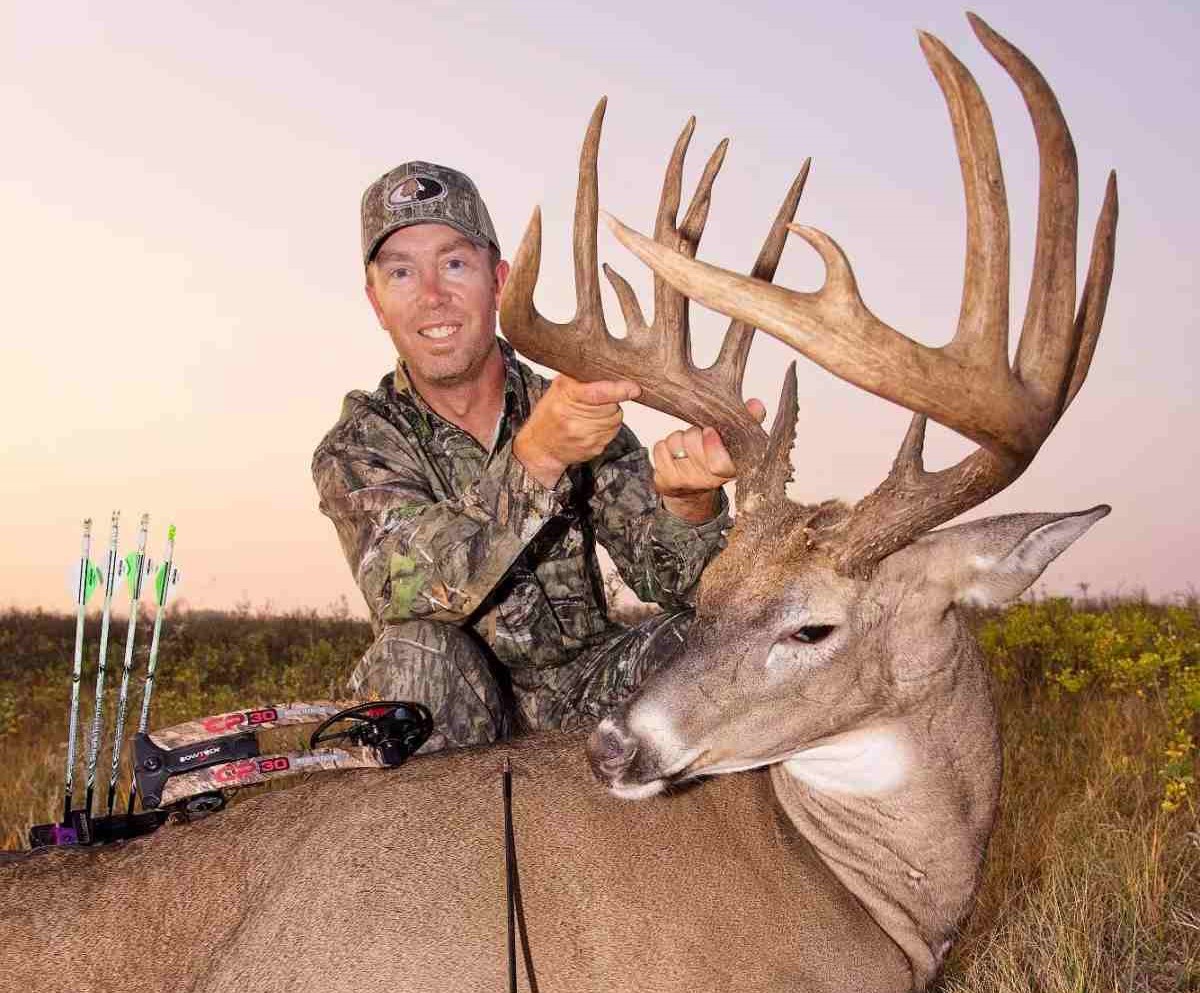
In September of 2023, after ten years, he snuck in with his bow. The buck he shot was over 200 inches. He had every one of his sheds going back to when the deer was a yearling, except one.
"For a kid that grew up in a family that didn't hunt, that fell madly in love with deer hunting, I've lived the hunting dream 50-fold," he says. "But everyone falls in love with white-tailed deer first. When you're 80 years old, hopefully your grandchildren are taking you to hunt a white-tailed deer in your back 40. That's where you start and where you finish."
That buck ended up on the cover of North American Whitetail the following year.
Same Love, Different Animal
Cody and Kelsy Robbins have hosted Live 2 Hunt on the Outdoor Channel for nearly 13 seasons. They travel North America hunting world-class big game, and he has filmed some of the biggest mule deer and whitetail bucks ever captured on camera, including a potential world-record archery mule deer.
He will tell you that Texas Longhorns and trophy hunting are not as different as they look.
"I have the exact same love for Longhorn cows," he says. "When you go out in April and find a gorgeous little fancy colored heifer calf laying out in the straw at sunrise in the morning, I get as much joy out of that as finding a Boone and Crockett whitetail shed."
The parallels run deeper than emotion. He studies horn genetics in Longhorns the same way he scouts antler genetics in white-tailed deer. He researches pedigrees before buying a heifer the same way he scouts a buck on camera for years before pulling the trigger. His rodeo friends have opinions about this.
"They'll be texting me saying, you're such a lunatic," he says. "That animal's meant for roping and you're down there acting like it's a baby puppy."
He does not disagree, he just does not care.
What Canada Teaches You About Body Type
Rafter 7 Longhorns operates in Delisle, Saskatchewan, in a climate that reaches -40°C in winter. What Cody has learned over 17 years of raising registered Longhorns in that environment is that big horn genetics and a Canadian winter are not always compatible.
"Those horns, they're made for cooling an animal's body," he says. "When you're up here in minus 40 and your animals aren't fleshy and they've got big horns, they don't do well. They're always stressed."
The first five years were rough. 50% of his animals came out of winter with lopsided horns, frozen tips, or horns that had fallen off entirely. He did not understand what was happening. He learned, slowly and expensively, that windbreaks were critical, that straw bedding had to be deep, that nutrition had to be right, and that the body type of the animal mattered more than he had originally wanted to admit.
His mentor through that process was Mark Stewart from Penocha, Alberta, the breeder who had introduced him to registered Longhorns at that hunting trade show years earlier. Stewart had 175 cows that ran between 1,100 and 1,200 pounds and wintered without trouble. He came out to Cody's ranch one day, looked at the herd, and told him what needed to change.
"He said, if you want to do a really good job and you want to raise show animals, you're going to have to get a little bigger-bodied bulls, a little fleshier bulls," Cody says. "And that's who I got that from."
It took nearly 10 years to eliminate frozen horns from the program entirely. He has not eliminated them fully. At last year's Canadian national show, one of his 18 heifer calves froze both horns. She was his favorite.
"You have to be ready to accept it now," he says. "But at least I've eliminated a lot of that."
Jungle Orchid and the Fort Worth Blizzard
The most recognizable animal at Rafter 7 Longhorns was not on the shopping list.
Cody's friend from Canada had flown to Fort Worth for a sale. A historic snowstorm had hit the city and almost nobody showed up. He spotted a Parker Brown cow in the pens that he thought Cody would love and sent him a blurry photo through the panels.
Cody looked her up in the catalog online. He loved her but told his friend she would never sell for anything close to his budget. He said three thousand dollars just to have a number. His friend wrote back forty minutes later.
She had sold for two thousand dollars. Nobody had been bidding.
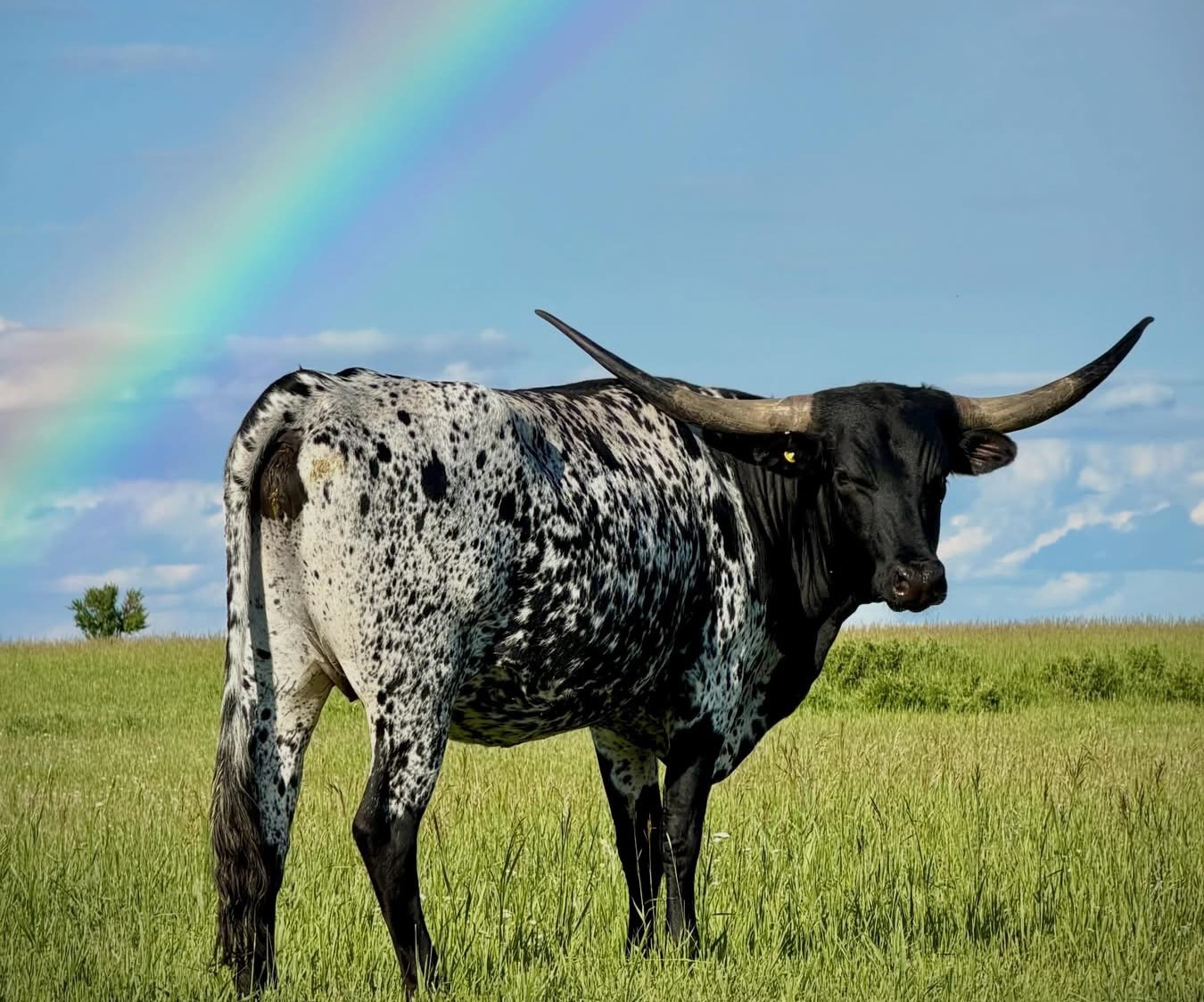
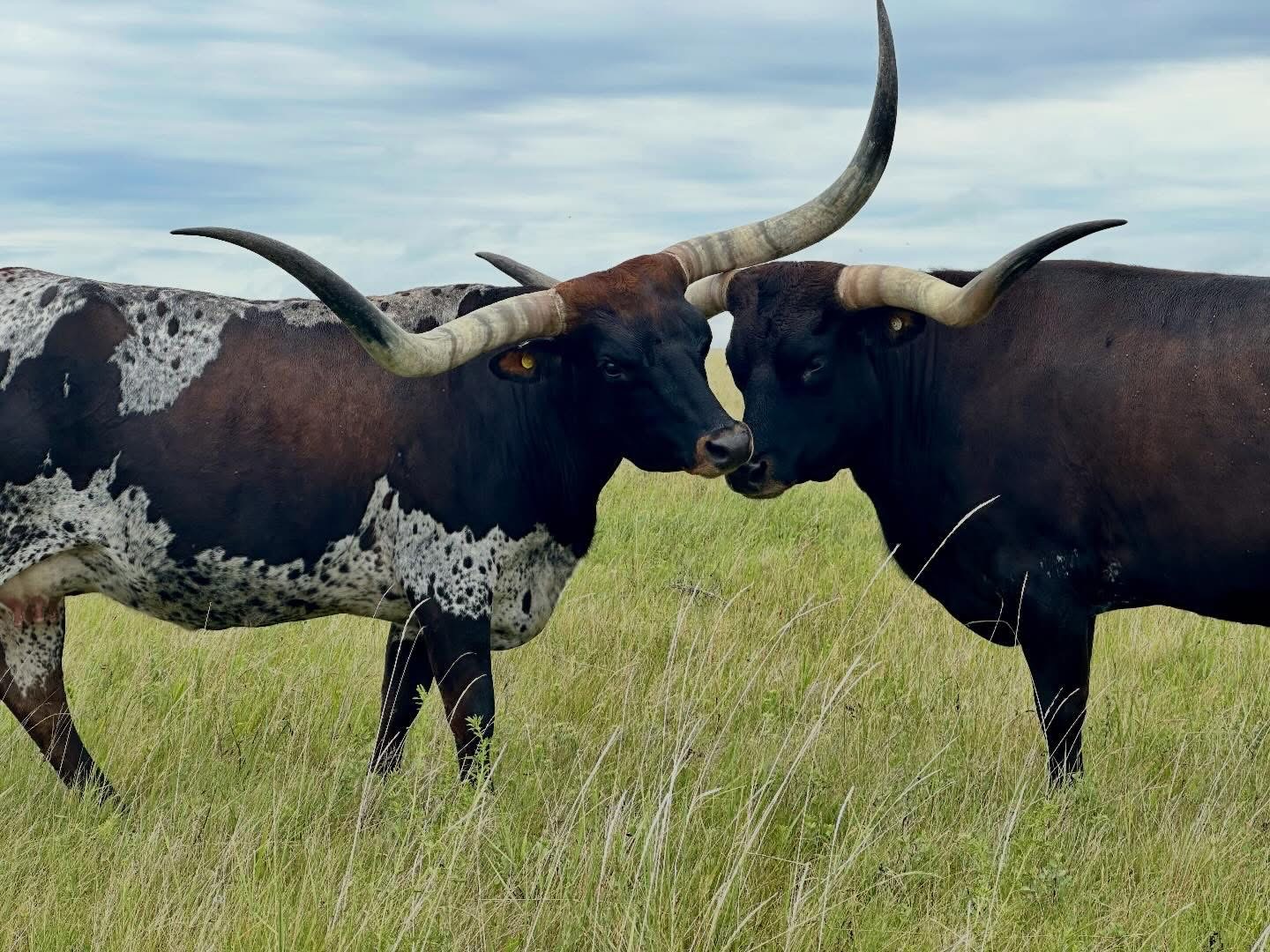
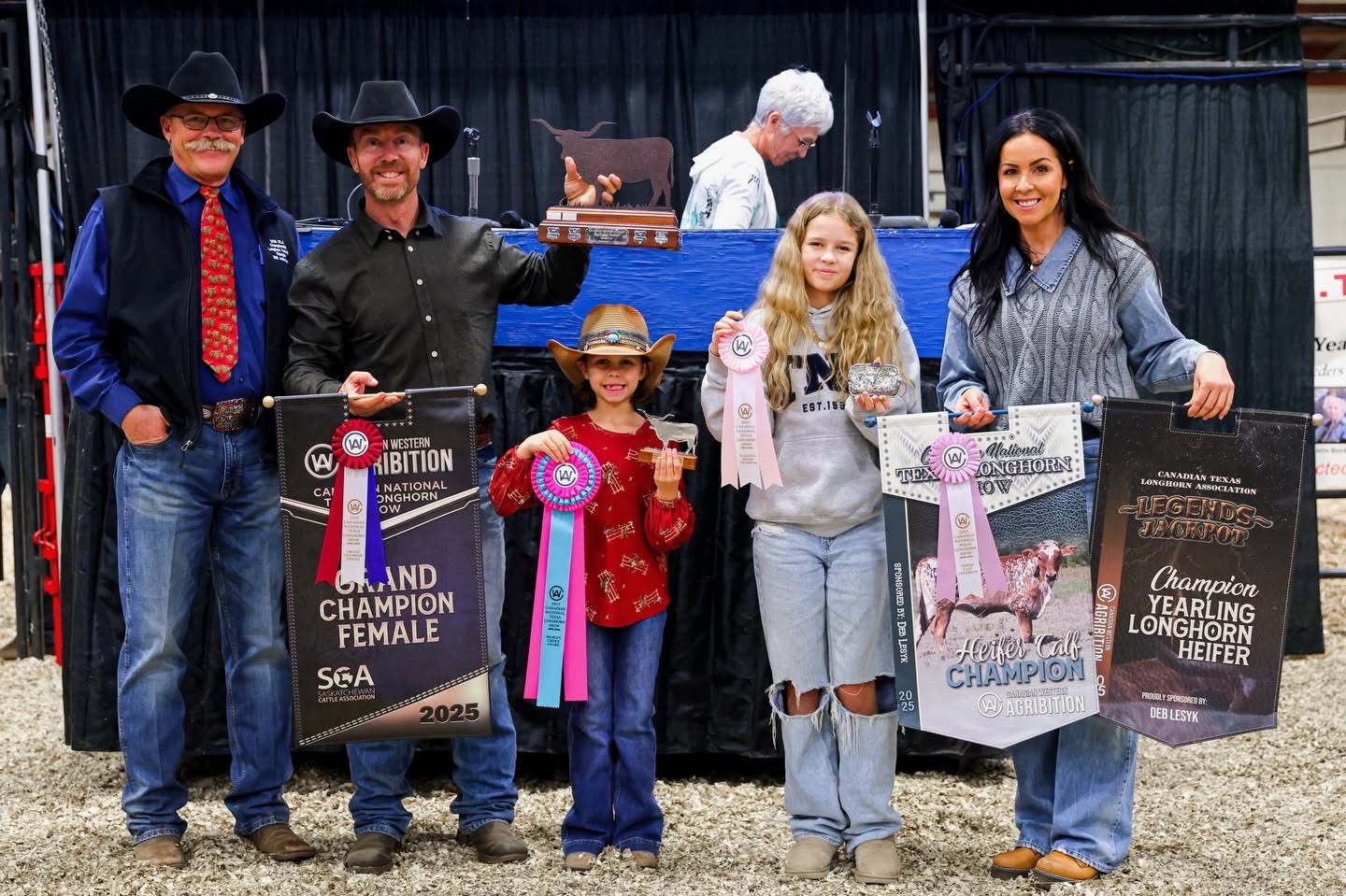
Jungle Orchid BCB, out of the Bolen Longhorn program, arrived in Canada a month later and has won grand champion female at the Canadian National Texas Longhorn Show two years in a row. She has, in Cody's words, a head like a princess. She has produced a perfect daughter and has big, beautiful horns.
Canada's Connection
For two years at Agribition, Cody worked the floor and told people the same thing: the genetics were coming, and they would have a way to find them. He saved every phone number. When the time came, he sent one message out to all of them.
"It was just wildfire," he says.
His goal is straightforward. He wants Rafter 7 to be the place Canadian breeders go when they want Nancy Dunn genetics, Ross Ohlendorf genetics, the Bolen bloodlines that produced Jungle Orchid BCB, without a 35-hour drive and a border crossing. He found those programs the same way most people find anything in the Longhorn world now, by spending hours on websites and following the watermark at the bottom back to the source. He wants his program to be that source for someone else.
Check out their website here: www.rafter7longhorns.com.
This article was written based on a podcast interview on From the Pasture with Hired Hand. Listen to the full episode wherever you get your podcasts, or learn more about breeder websites at hiredhandsoftware.com.