Preserving the Legacy: How Frontier Longhorns Is Building, One Animal at a Time
by
Hannah Farber
| Jul 14, 2026
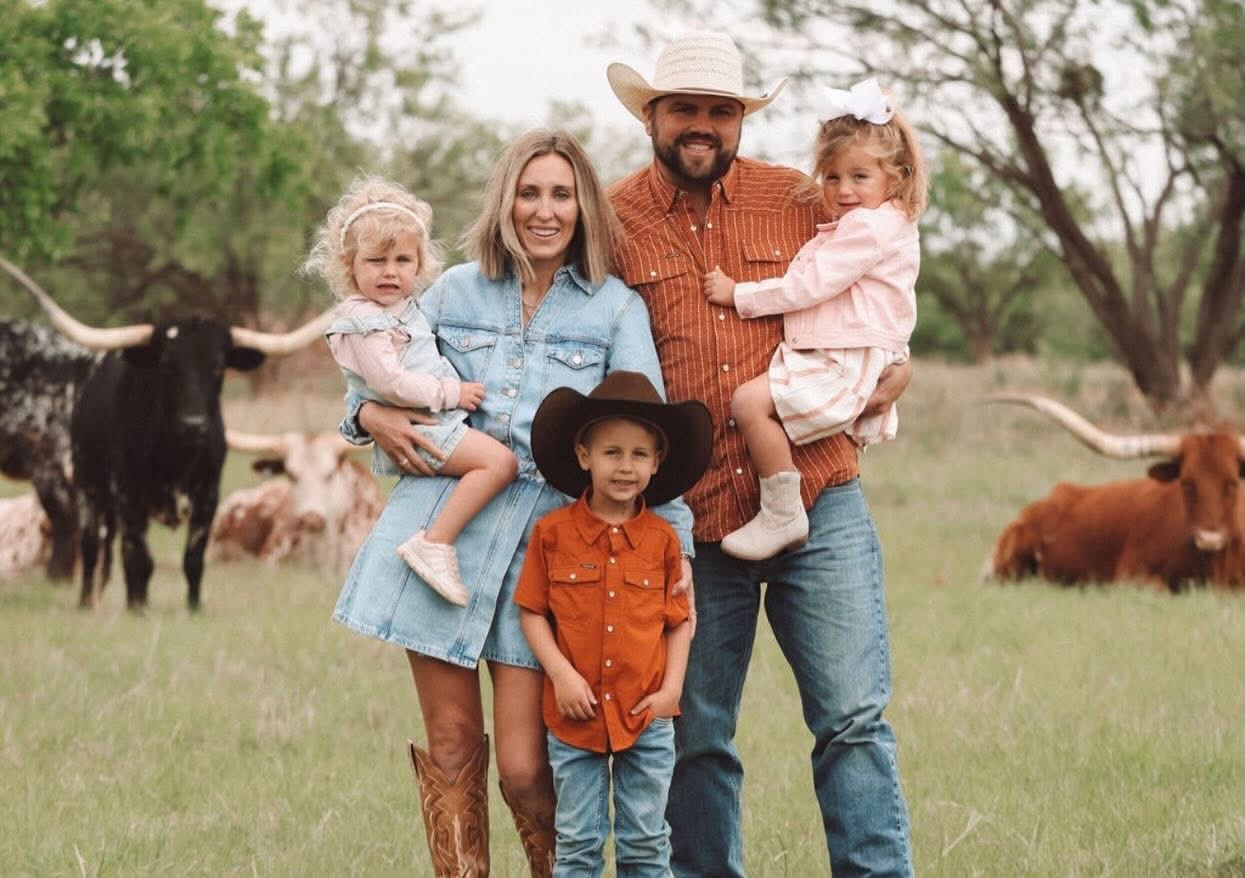
Tanner Evans was about 12 years old when his grandfather bought the first two Longhorns.
It was the early 2000s. They were living outside Abilene, Texas, on about 150 acres, and his grandfather wanted some pasture ornaments. He bought a young steer and a young heifer from Todd McKnight, who was living in Abilene at the time, before McKnight eventually moved to Kansas. The heifer would live on the Evans property for the rest of her life, calving until she was 17 or 18, dying at around 21.
Tanner measures her differently now than he would have then. At 75” TTT, she was significant for a cow born in the early 2000s. Looking back, he says they did not fully appreciate how good she was. They were not trying to build a program. They just had some Longhorns.
“She was a good mother. She had calves. She calved her last calf when she was probably four years before she passed,” Tanner says. “That is one of the key things we look for now.”
Why He Came Back
After stepping away from the breed for a while, Tanner made a deliberate decision to get back in. The choice was between launching a commercial beef operation and returning to Longhorns. He chose Longhorns for reasons that go past economics.
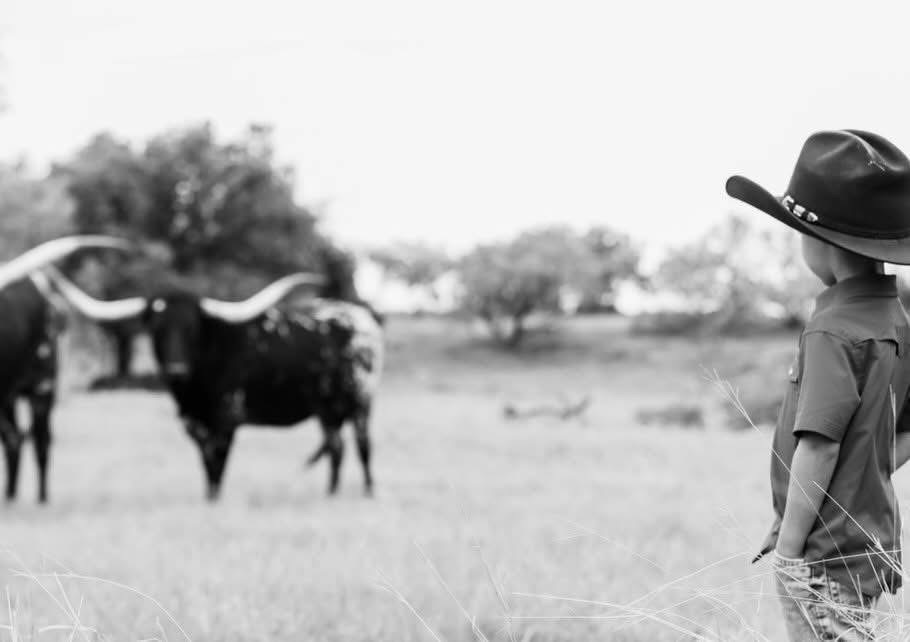
“I’ve always been fascinated with Texas and Western history,” he says. “I just think there’s nothing that symbolizes Texas history in the West perhaps better than the iconic Longhorn.”
That history is also where the name Frontier Longhorns comes from. Abilene has a museum called Frontier Texas that tells the story of westward expansion, and Tanner runs a land improvement business called Frontier Land Improvement. The word means something to him, and it fits his mission: preserving the legacy of the Texas Longhorn while building something that will stand the test of time.
“We really want to embody that preserving the legacy portion,” he says. “I think there’s no better way to do that than pay homage to the history of the Texas Longhorn as the cattle breed that was at the forefront of the Western expansion.”
What He Is Building Toward
Tanner ranks his breeding priorities in order: structure first, color second, horn growth third. He is direct about it, not because horn does not matter, but because the industry has, in his view, spent a stretch prioritizing tip to tip at the expense of other traits, and is now coming back to the complete animal.
“I really do think there was probably a period of time that we maybe strayed away from the things that really make a Texas Longhorn unique,” he says. “I think while we focused more on tip to tip, I think we’re coming back to that.”
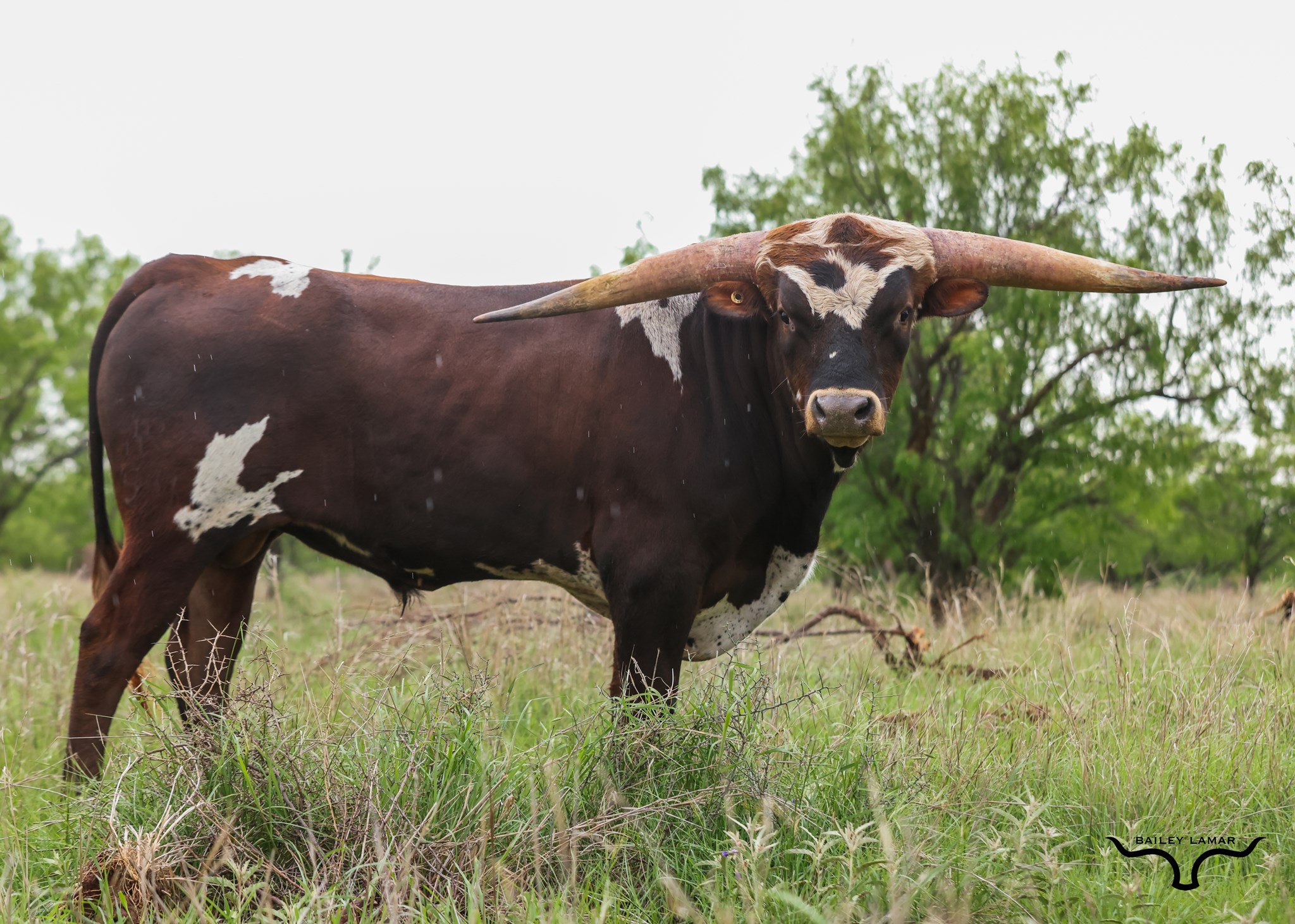
His newest herd sire is NRR Mr. Handsome, a Norse Ridge Ranch bull he bought at the Hired Hand Sale, a son of DH Hired Hand. Mr. Handsome is athletic, more trimmed and toned than massive, and Tanner has deliberately paired him with the big-bodied cows in his herd because that is where the match makes sense. He is not asking the bull to be something he is not.
“He fits the bill perfect from that athletic type standpoint,” Tanner says. “With the cows that we have, we don’t need a giant to still have very structurally sound heifers.”
The DNA Side
Tanner got into Neogen color genetic testing after a conversation with Marshall Merritt of Norse Ridge Ranch, who shared a sheet of all his cows’ results. Tanner was hooked.
The process is simpler than it sounds. A barcode kit from Valley Vet, a quick sample, and back comes a report covering coat color genetics plus a range of other traits. The reports can be dense, but Neogen’s team will walk a new user through reading them.
“It seems overwhelming to do it, but it’s really not,” Tanner says. “I would recommend it to anybody. It’s a very helpful tool and just good to know about your cattle.”
For a program that ranks color second, having exact percentages on expected coat color from specific pairings is genuinely useful. It has not yet made him call off a pairing he was planning, but he expects it will start shaping decisions soon.
Disposition Is Harder to Fix Than Most People Think
When asked what trait is harder to breed out of a line than most people realize, Tanner does not say horn or structure. He says disposition.
“Wild cows raise wild calves,” he says. “I don’t think that’s something that’s easily bred out of a line.” His three-year-old daughter can walk up and scratch Mr. Handsome on the head. That is the standard he holds the whole herd to. Beautiful animals that produce well but are difficult to work do not make the program, regardless of what the pedigree says.
“That definitely will play a huge factor in those borderline cull-keep heifers,” he says. “I don’t want to mess with crazy cows.”
Building One Animal at a Time
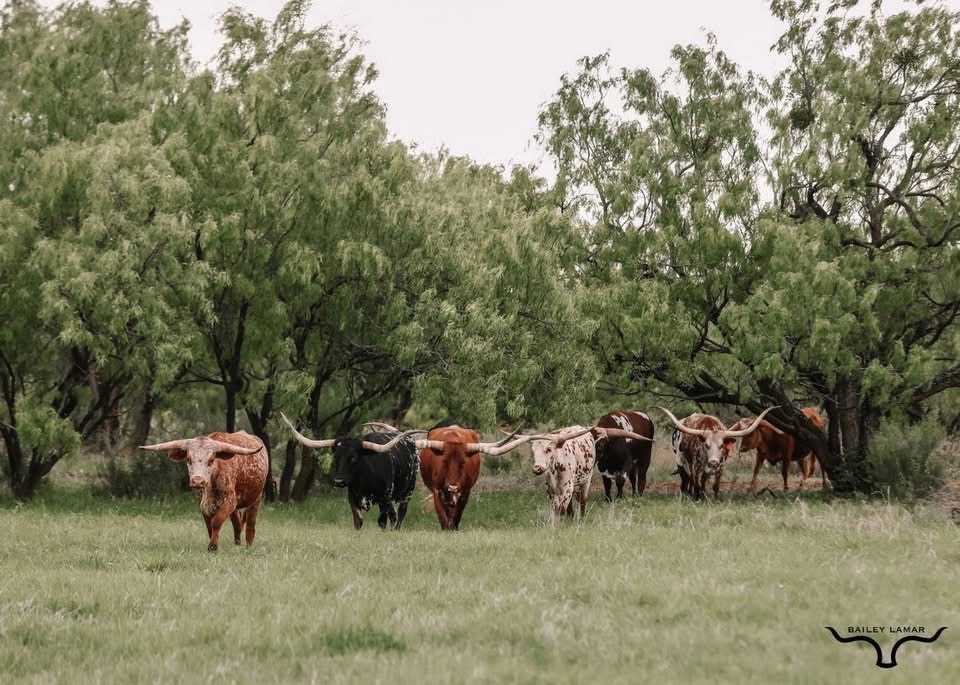
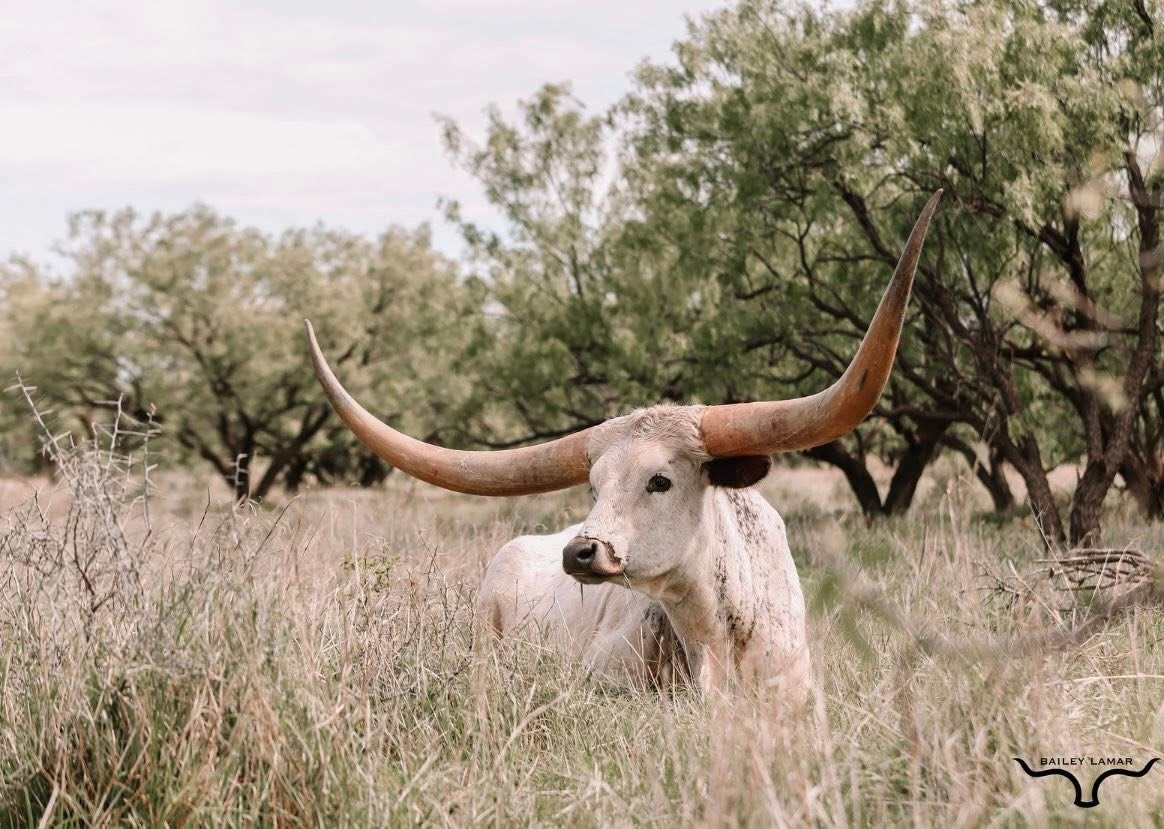
Frontier Longhorns is a younger program by Tanner’s own description. He started with eight or ten head, attends sales every year, and has a plan in his head for what he wants to add each year. He is 36. He says he has time to build it right.
“I wasn’t going to spend the kind of money that it takes to build a program where I want to be in five years. I wasn’t going to spend the money right now to have that now,” he says. “I think you can do it both ways if you have the time and the patience to build over time.”
His goal is not a number, it is consistency. Animals he is proud to take to elite sales and compete with at futurities. A herd that produces well and reliably, not one that occasionally throws something special.
That patience shows up in how he sells, too. Buyers find him the same way he researches other ranches before a sale, looking up pedigrees online before they ever load a trailer. Find Frontier Longhorns at www.frontierlonghorns.com.
This article was written based on a podcast interview on From the Pasture with Hired Hand. Listen to the full episode wherever you get your podcasts, or learn more about breeder websites at hiredhandsoftware.com.