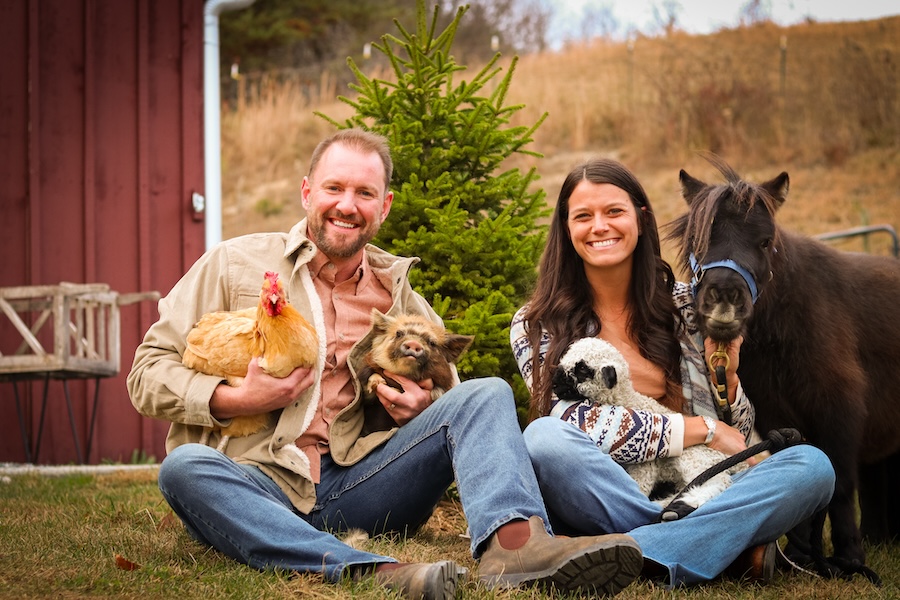
Fran Montgomery was working as an executive assistant at a private club in Western North Carolina. Taylor Montgomery was the executive chef. They didn't know each other well. But one day, Fran asked Taylor if he'd like to come meet her cow.
It's not a question most people get asked. And Taylor had never missed a Friday night service. But he skipped this one.
Fran was living in a townhome at the time, leasing land nearby to keep a single Highland cow named Millie. Taylor, meanwhile, had quietly purchased an old farmhouse and a few acres without telling anyone at work. Neither of them knew what the other was building toward.
Millie is still on the farm today.
A Farm Built on Shared Conviction
Montgomery Sky Farm was established in 2018 in Leicester, North Carolina. Taylor brought more than 25 years in professional kitchens. Fran brought more than two decades in veterinary medicine. Together, they started building something that operates in several connected but distinct parts: a regenerative working farm, a chef-driven private dining experience, an educational destination, and Final Run Animal Rescue.
Each piece has its own purpose. But the common thread, as Fran puts it, is care. "Care for the land, care for food, where it comes from, how it's grown, care for animals."
For the first four and a half years, Taylor was still commuting an hour and a half each way to a restaurant in Greenville, South Carolina. Three-hour round trip. Long days. The farm was growing on the side, slowly and intentionally, while they tested the waters with small dining events on the property.
They called it Operation Bring Taylor Home.
In late summer 2024, he finally made the leap. "It was a scary thing," Taylor says. "But it shows promise."
Regenerative Farming as Foundation
When they first started growing on the property, neighboring farmers showed Taylor their methods: synthetic fertilizers down the drip tape, soil treated as a substrate. It was productive. It wasn't sustainable.
"Regenerative for me is we're going to make it better than how we found it," Taylor says.
That means composting animal manure, cover cropping, eliminating unnecessary tilling, and prioritizing soil biodiversity. The philosophy extends to what they grow. Montgomery Sky Farm is actively preserving rare and heirloom crop varieties that have disappeared from commercial agriculture because they don't ship well or can't be harvested mechanically.
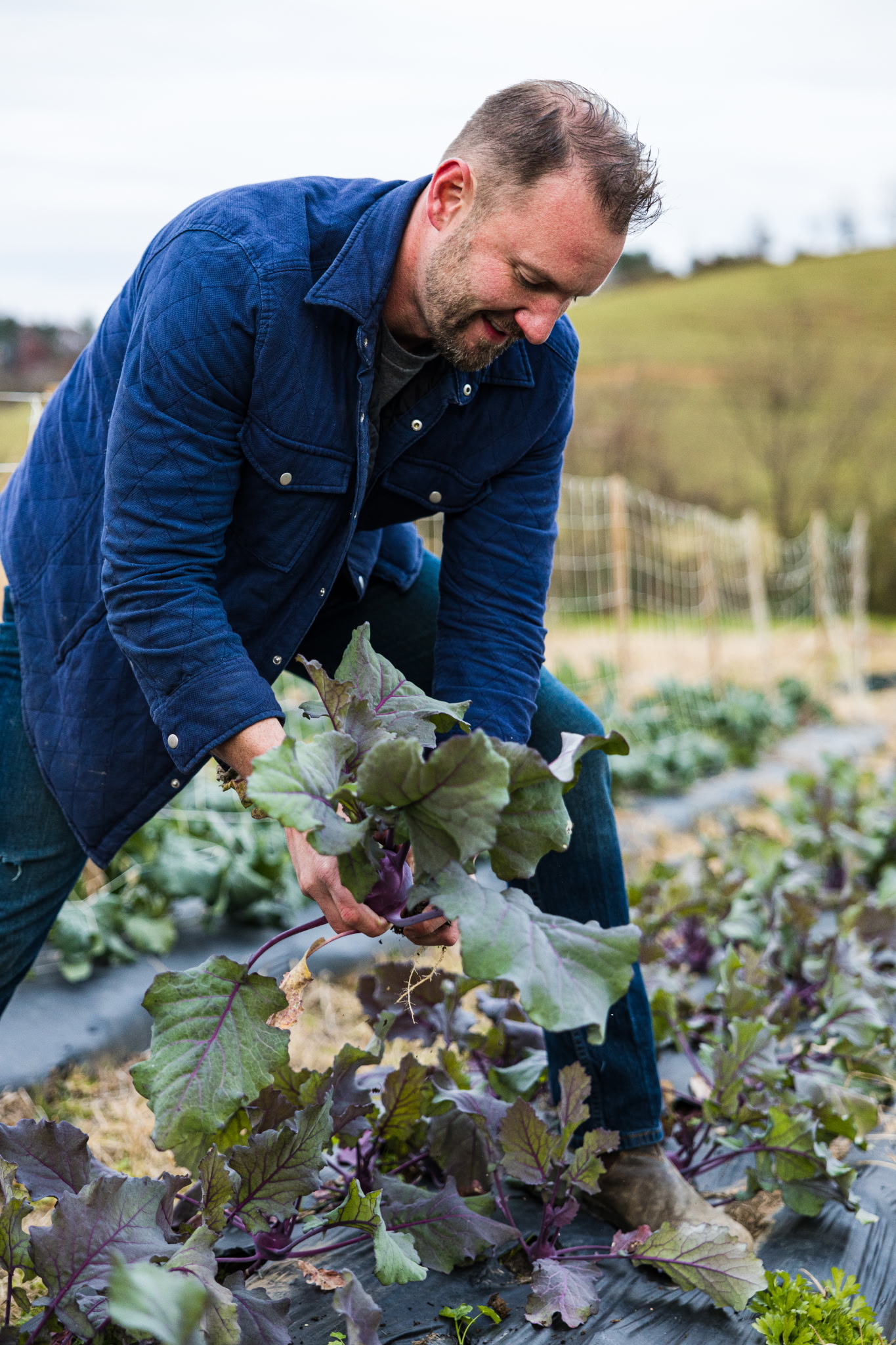
Afghan purple carrots. Walla Walla onions. Runner beans. Hidatsa beans, once on the endangered list before the Seed Savers Exchange in Decorah, Iowa helped bring them back.
"Ninety percent of our vegetable varieties are gone because they don't travel well," Taylor says. "But that diversity is our safety net."
He calls himself a plant nerd now. Mostly self-taught, driven by reading and research and a handful of heroes who've been doing it longer. What opened his world as a chef was learning at what point in a plant's growth cycle you can harvest the most flavor, whether that's the intensity of a bolting plant or the delicacy of baby greens.
The Chef's Table
Montgomery Sky Farm doesn't operate like a restaurant. They host private dining experiences where guests eat what was harvested that day, sometimes that hour, from the land around them.
"Sometimes my pick list for the garden is longer than the prep list," Taylor says. "Sometimes I step outside and the ingredient I forgot to pick is growing right beside where we're serving dinner."
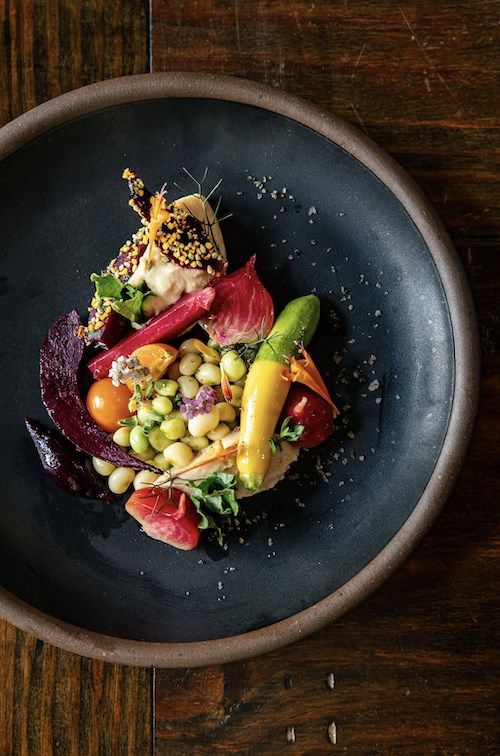
Seasonality drives everything. No asparagus unless it's asparagus season. Spring brings snap peas, baby sorrel, and spring radishes. Summer means heirloom tomatoes and peppers. Year-round, there are herbs most people have never encountered: lemon sorrel that needs no vinaigrette, agastache flowers that taste like honeysuckle and mint, summer and winter savory, wild sumac that fills the citrus gap in a climate that can't grow it.
They've set tables in the actual growing fields. Taylor jokes it's like "a Willy Wonka of agriculture."
Within 48 hours of Taylor's James Beard Award nomination for Best Chef Southeast, they received 84 inquiries for private dining experiences. The nomination came at a meaningful time. Western North Carolina had just been hit by Hurricane Helene, and the couple was questioning whether they were chasing the right dream. "It definitely reaffirms that we're on the right path," Taylor says.
Highland Cattle and Heritage Livestock
Fran's connection to Highland cattle goes back about ten years, sparked by a friendship with a woman named Emily who has been a major figure in the breed. Fran was drawn to the animals' adaptability, their role on the land, and, candidly, the way they look.
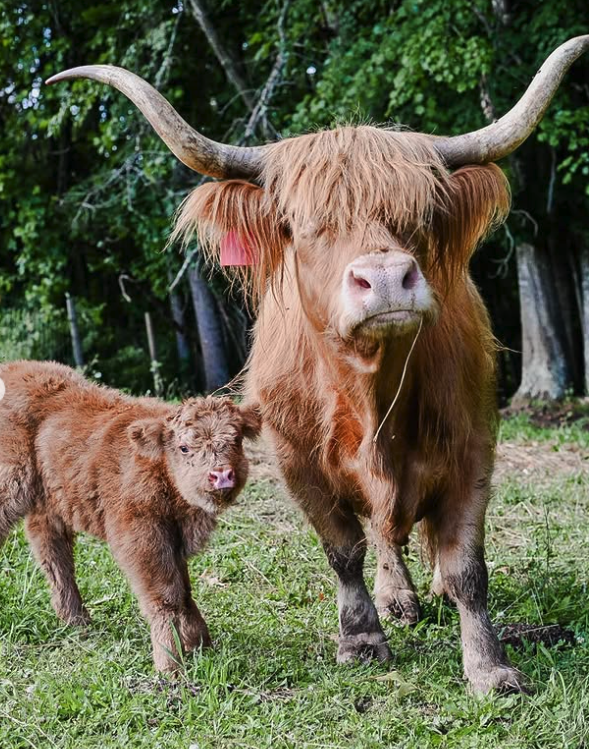
The Highlands at Montgomery Sky Farm aren't raised for consumption. They support rotational grazing, their manure feeds the compost program, and they serve as ambassadors for heritage breeds. Fran and Taylor do date nights that involve wine and scooping cow patties out of the pasture. "That sounds like a great date," Fran says, laughing. "If you're looking for a date night, it's a great option."
The farm also became the first in the Southeast to acquire Valais Blacknose sheep, part of what they call their preservation programs.
Final Run Animal Rescue
Alongside the farm sits Final Run Animal Rescue, a nonprofit Fran founded to rehabilitate animals with complex medical needs or difficult pasts. Many of the animals aren't rehomed. They live out their lives on the property.
"Our goal is to create a place where animals that came from difficult situations can learn to trust again," Fran says.
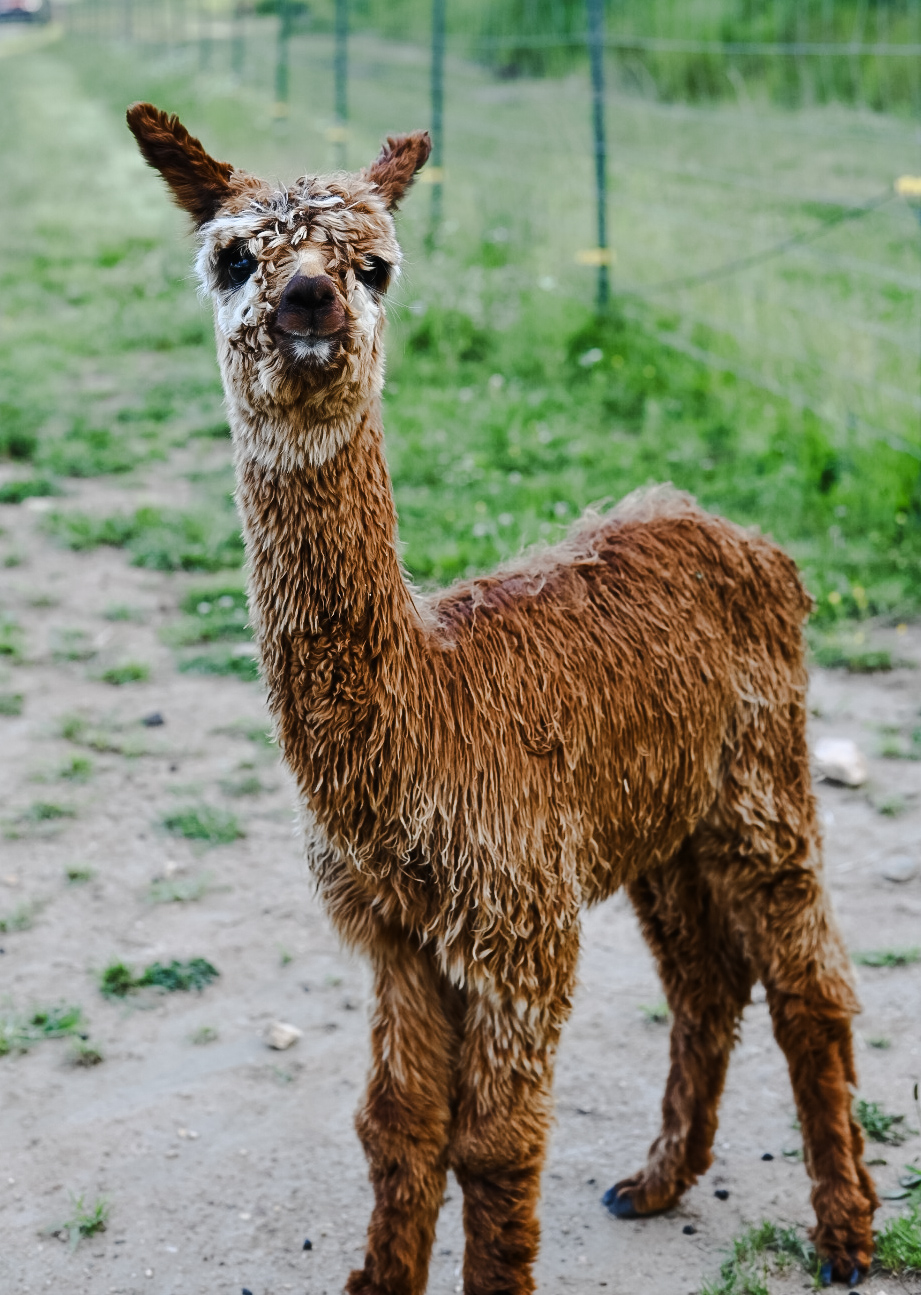
Daily operations include stall cleaning, medical care, feeding, fundraising, and intake coordination. They receive intake requests weekly. Taylor puts it plainly: "It doesn't matter what the weather is. We're out there with three-pound hammers, busting four inches of ice off their water troughs twice a day."
The rescue also serves an educational role. Visitors meet rescue donkeys and other animals during tours and events, including a popular Easter egg hunt and holiday gatherings that Fran organizes each year. Some families have been coming long enough that Fran and Taylor have watched their children grow up.
Diversifying to Sustain the Mission
Like many modern farms, Montgomery Sky Farm has diversified to stay viable. In addition to private dining and farm tours, they opened Field & Creek Market, an on-farm market that sells their produce directly to the community and partners with local farmers who raise ethically produced meats.
The market launched in the aftermath of Hurricane Helene, when access to healthy food in their surrounding communities became even more scarce. "It's another outlet to share the produce that we're losing," Taylor says. "Unless you're from a lineage of farmers or you get a job with a commercial outfit, it's hard to make a living or have a startup farm. You have to diversify."
What's Next
The biggest challenge now isn't growth. It's managing it without losing what makes this place what it is. A commercial kitchen expansion is on the horizon to handle the demand that followed the James Beard nomination. But scale isn't the goal. Intention is.
"If you love something, if you believe in something, push toward it," Fran says. "Even if people tell you it's a pipe dream. Anything is possible if you're willing to work hard at it. That's why we say the sky's limitless."
Montgomery Sky Farm runs on a Hired Hand powered website. Fran has redesigned it twice as the farm's mission has evolved, and she's direct about why she keeps investing in it: "Change and growth is inevitable, and your website has to evolve with your mission." For a farm that operates as a dining destination, an animal rescue, a market, and a working agricultural operation, getting visitors to the right place online is part of how all of it works.